D4. Sparkling Wines – Summary(English)

日本語ページはこちら

The options in the environment and winemaking that are appropriate for sparkling wine differ in some respects from those for still wine.

This section summarizes the standard options for making sparkling wine.

1. Making Sparkling Wine

1. Viticulture

The qualities of the grapes required for a high quality sparkling wine are as follows.

  • Possesses high acidity (medium (+) to high)
  • Low alcohol potential (9 – 11%)
    → 1 – 2% alcohol is added during the secondary fermentation that takes place in many sparkling wines
  • The intensity of the fruitiness is reduced.

Therefore, cooler climates, where the grapes ripen slowly while retaining their acidity, are ideal for sparkling wine. Areas not normally planted with still wine grapes may also be planted with sparkling grapes.

There are three or a combination of factors that contribute to a cool climate in an area.

  • High latitude areas (England, Tasmania, etc.)
  • Areas near the coast (e.g. Sonoma Coast)
  • High elevation (e.g. Torento)

In addition, the qualities required for sparkling wine (high acidity, low alcohol potential, and delicate flavors) can be obtained through high yields. The ability to harvest grapes earlier than with still wines and to maximize production are advantages for producers.

OptionsAdvantagesDisadvantages
Early harvest・Reducing risk of mildew・Risk of unripe flavors
Hand harvest・Eliminates diseased grapes during selection at harvest
・Minimizes crushing of the berries
・Needs to long harvest time (may not be harvested at desired ripeness)
・High labor costs
Options for harvesting sparkling wine

In addition, growers need to pay attention to obtaining clean and healthy fruits. The reasons for this are as follows.

  • The foreign flavors produced by diseased fruit are accentuated by foaming.
  • The enzyme laccase, released by Botrytis-infected grapes, can cause severe oxidation.

2. Grape Variety

The most commonly used varieties for making premium sparkling wine are Chardonnay and Pinot Noir.

FactorChardonnayPinot Noir
Flavor・Aromas of apple and citrus
・Biscuits from lees aging
AcidityMedium (+) 〜 HighHigh
AlcoholLow
Advantages・Cooler climate allows flavors to ripen faster
High yields in good years
・Early ripening makes it suitable for cooler climates
Gives body to the blend
Disadvantages・Early budding (susceptible to spring frosts)
・Susceptible to coulure and millerandage
Rot from botrytis before harvest
・Early budding
・Susceptible to diseases due to thin skin (mildew, powdery mildew, Botrytis rot, leafroll)
Characteristics of Grape Varieties Used in Sparkling Wine

Many other grape varieties are used to make sparkling wine around the world, and some of the factors that influence the style of wine include.

  • Ability to retain high acidity
  • Intensity of aromas (neutral, fruit-suppressed varieties are preferred, but some regions use aromatic varieties)
  • Compatibility of the base wine with the autolysis

3. Winemaking

1. Pressing

Whole bunch pressing is often used for premium wines, and is often regulated by PDO.

  • The advantage is that it is the gentlest pressing method (less phenols are extracted and delicate juice can be extracted).
  • The disadvantage is that the number of bunches that can be fed into the press at one time is small, so the process takes time.

Other than whole bunch presses, there are pneumatic and basket presses that can be used for gentle pressing as well.

There are two types of juice: free-run juice and pressed juice. Pressed juice has higher phenols and pH solids, and pH levels and higher solids content. It is used for early drinking wines due to its shorter aging time.

The juice is clarified before primary fermentation, and any excess tannin or color is adjusted at this stage.


2. Primary Fermentation

①Primary Fermentation

Since primary fermentation needs to be done reliably and soundly, it is generally carried out in the following manner.

  1. Performed at 14 to 20°C
    • To preserve the flavor of the fruit.
    • An environment that is too cold for the yeast and a low pH is stressful.
  2. Fermentation takes place in stainless steel tanks
    • Stainless steel tanks are capable of fermenting in large quantities while maintaining temperature control.
    • Easy to clean tanks before and after fermentation
  3. Use cultured yeast that can handle both primary and secondary fermentation (generally, “Prise de mousse (EC1118)” is used).
    1. Yeast requirements for Primary fermentation
      • Yeast that can reliably ferment even under conditions of high acidity and low pH
        • A fully alcoholic wine is required for the secondary fermentation.
        • Neutral yeasts are preferred, as pronounced primary aromas are not desirable.
    2. Yeast requirements for Secondary fermentation
      • Able to initiate fermentation in an environment with high alcohol content and low pH.
      • Able to continue fermentation at low temperatures, high pressure and low nutrient levels.
②Malolactic Fermentation

The choice of whether or not to perform malolactic fermentation depends on the region and the style the producer is aiming for. The purposes of malolactic fermentation are as follows

  • Reduce the acidity of the wine
  • Enhance the texture (but without the buttery notes found in white wines. This is due to the fact that “diacetyl” is metabolized by the yeast during the secondary fermentation.)
  • Avoid the risk of unintentional malolactic fermentation during secondary fermentation (filtration is an option to make the wine sterile).
③Aging of Base Wine

Some winemakers age their base wines in oak barrels. However, since oak flavors (vanilla, toast, spice, etc.) are amplified by secondary fermentation, only a small percentage of new oak is used.


3. Blending(Assemblage)

In the production of sparkling wine, four blends may be made.

  1. Different Vineyards
  2. Grape Variety
  3. Different Vintages
  4. Different Vinification Methods

The purpose of blending is as floows

BalancingAdding varietal character or vineyard differences (e.g. PN or warm vineyard body)
Maintaining ConsistencyBlending vintages to maintain consistency of product from year to year
Objective StyleTo achieve each producer’s desired style, such as early drinking style or a style that can be aged for a long time
Rosé Wine ProductionBlending red and white wines to produce rosé wines (some PDOs do not allow blending)
Complementary ComplexityBlending of varietals, vineyards, vintages and some barrel-aged wines to provide complexity in aroma and taste
Defect MinimizationIf some of the wine is defective, blending it with a large quantity of healthy wine will reduce the exposure of the defect.
Compensating for Production VolumeBlending can compensate for low vineyard area in a particular area.
Price AdjustmentPrice adjustments can be made by blending expensive grapes with less expensive grapes (e.g. Meunier blends in Champagne).
The Purpose of Blending in Sparkling Wine

Wines blended for this purpose are clarified and then subjected to secondary fermentation.


4. Secondary Fermentation

The secondary fermentation process is as follows.

#MethodOverview
ATraditionalA Traditional method of secondary fermentation in the same bottle as the wine to be sold.
BTransferA method that maintains the aroma of autolysis while reducing the cost of Traditional method.
CAncestralA primitive method, revived by small producers around the world as Pet Nat, short for Pétillant naturel.
DTankAlso known as the Sharmat method, used to produce inexpensive sparkling wine.
ECarbonationThe simplest method of producing low-pressure, inexpensive sparkling wine.
Method for Making Sparkling Wine

A. Traditional Method

Traditional method of secondary fermentation in the same bottle as the wine to be sold.
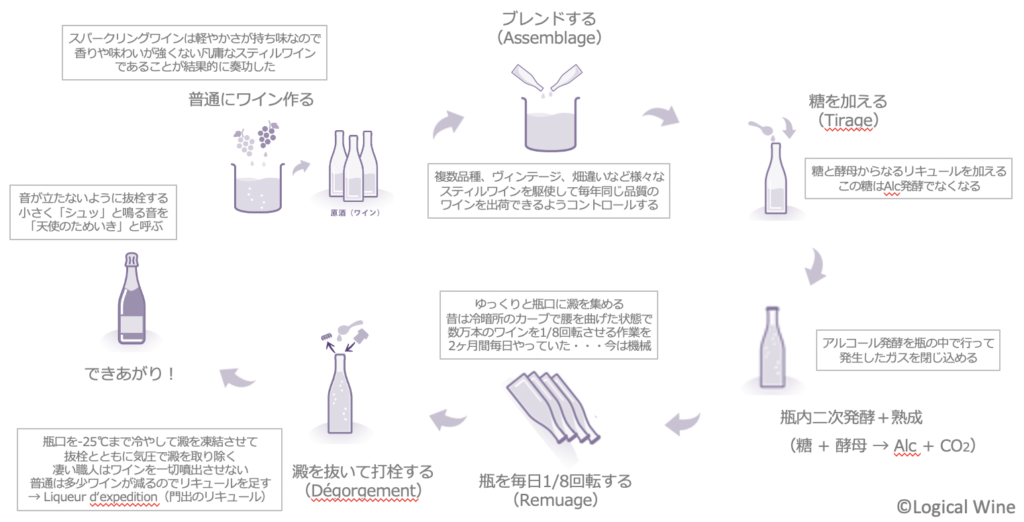
Process of Traditional Method
A-4. Secondary Fermentation

For the secondary fermentation, a “liqueur de tirage” is added to the base wine.
The “liqueur de tirage” is a mixture of wine, must, sugar, cultured yeast, yeast nutrients, and clarifying agents such as bentonite and alginate.

24 g sucrose per liter
 ↓ 
1.5% alcohol and CO2 (equivalent to 6 atmospheres)

Secondary fermentation takes place under the following conditions

  • Fermentation begins with wine at 9.5-11% alcohol, temperature around 16°C, pH below 3
  • Bottles are stored in “sur latte” (bottles lying horizontally at a temperature of 10-12°C)
  • Fermentation lasts 4 to 6 weeks
A-5. Aging on Lees

After fermentation is complete, the wine is left to mature with the yeast intact. The maturation period is regulated by the PDO, and after 15 months, the effects of autolysis become apparent.

The advantages of lees aging are as follows

  • Autolysis, the enzymatic degradation of dead yeast cells, produces compounds that give biscuit-like complexity.
  • Autolysis lasts 4 to 5 years, and in some cases up to 10 years.
  • Yeast cells have antioxidant properties, so there is a benefit to leaving them on the lees after autolysis is complete (although the longer this period, the faster the wine will change after discharge. For this reason, it is advisable to drink immediately after release).
A-6. Bottling(Riddling → Degorgement → liqueur d’expédition)

After maturation, the wine is riddled to remove the lees, followed by “Dégorgement” and “liqueur d’expédition”.

①Riddling

After the wine has finished maturing, it is riddled in order to collect the lees at the mouth of the bottle. The lees are collected by turning the bottle upside down and shaking it while rotating it.

  • Manual (pupitres):8 weeks
  • Automatic (gyropalettes):3 to 4 days

If the wine is not to be racked immediately, it is stored in an upside-down container called a “sur pointe”.

②Dégorgement

De-racking needs to be done with minimal loss of wine and pressure, and is automated today.

  1. Cool the bottle to about 7°C (the solubility of CO2 is increased, thus reducing wine effervescence)
  2. Immerse the neck in freezing brine (this freezes the yeast sediment, facilitates extraction and prevents sediment from falling)
  3. Set the bottle upright.
  4. Remove the crown cap and eject the yeast and plug by pressure inside the bottle
③liqueur d’expédition

Before bottling, a “liqueur d’expédition” is added. “liqueur d’expédition” is a mixture of wine and sugar (Dosage) or RCGM (Rectified Concentrated Grape Must). It is a mixture of wine and sugar (dosage) or RCGM (Rectified Concentrated Grape Must) and has the following advantages

  • Balance with acidity (some is needed, especially in young wines, as acidity rounds out with long aging)
  • Maillard reaction with compounds produced during yeast autolysis, resulting in aromas of roasted and toasted vanilla.

B. Transfer Method

This method was originally developed to avoid the cost of manual bottling, but the benefits have diminished as the bottling and de-racking process has become more automated.

The transfer method is also allowed in Champagne for bottles smaller than 375 ml or larger than 3,000 ml, where bottle transfer is difficult.

The transfer method is as follows

  1. The second fermentation takes place in the bottle, just as in the traditional method.
  2. There is no need to add fining agents to the “liqueur de tirage” because there is no bottle movement.
  3. The aged wine is cooled to 0°C and discharged into a pressurized receiver tank.
  4. Dosage and SO2 are added, then the wine is filtered and bottled.

C. Ancestral Method

A method for producing sparkling in primary fermentation by placing partially fermented must in a bottle.

  • By measuring the sugar content of the partially fermented must, the final pressure level can be estimated.
  • Dead yeast sediment accumulates in the bottle, but it is the winery’s decision whether or not to remove it.
  • There is no involvement after bottling, so the final wine quality will vary.
  • Dosage is generally not done, but after a few months, the yeast cannot survive due to lack of nutrients, so sugar generally remain in the final product.

D. Tank Method

Since the tank method does not require long periods of lees aging with dynamic bottling, degorgement, and secondary fermentation, it is possible to mass produce inexpensive wines at low cost.

  1. Aromatic varieties are also used to emphasize the primary aromas.
  2. Primary fermentation takes place at 16-18°C (to preserve fresh floral and fruity aromas)
  3. Secondary fermentation takes place in pressurized tanks with sugar and yeast in as little as one month (sometimes the wine is left on the lees for a longer period of time, but pressurized tanks are expensive and therefore less economical).
  4. Once the wine has reached the desired pressure and sugar content, it is cooled to 2-4°C to stop fermentation.
Asti Method

A variation of the tank method, in which sparkling wine is produced in a single fermentation.

  1. Sugar is provided by the original must, not the tirage.
  2. In the early stages of fermentation, CO2 is vented through a valve.
  3. The sugar and pressure levels are measured and the bubble is closed during fermentation, after which the CO2 is retained.
  4. When the desired sugar and pressure levels are reached, the wine is rapidly chilled to stop fermentation.
  5. The wine is filtered under pressure to remove the yeast and bottled.

E. Carbonation

A method of injecting carbon dioxide while the wine is under pressure.

The quality of the base wine is important because it can retain the aromas and flavors of the base wine, but it can also highlight flaws.


2. Sweetness Description, Foram Condition, etc.

1. Sweetness Description

The EU has established rules for residual sugar content and labeling, and many regions outside the EU also use labeling in accordance with these rules.

Residual SugarMajor IndicationsIndications by Region
0〜3gBrut NatureBruto Natural / Naturherb
Zeto Dosage
0〜6gExtra BrutExtra Bruto / Extra Herb
0〜12gBrutBruto / Herb
12〜17gExtra-SecExtra-Dry
Extra Trocken
17〜32gSecSecco / Dry / Trocken
32〜50gDemi-SecSemi-Seco / Medium-Dry
Abboccato / Halbtrocken
50+ gDouxDolce / Sweet / Mild

2. State of the Form

Since there are many variables involved in the size, condition and formation of bubbles, WSET does not mention them extensively.

  • Sugar content of the grapes (potential alcohol content)
  • The ability of CO2 to dissolve into the wine (dependent on many factors including grape variety, health, and sugar content)
  • Duration of lees aging (the longer the aging period, the more CO2 is lost but the longer the bubbles last)
  • Degorgement process (degree of CO2 loss)
  • Size and shape of the glass, cleaning conditions, temperature of the wine, etc.

3. How to Seal the bottle

Cork is generally used to seal sparkling wine.

  • The diameter of the cork is 31mm, compared to the inner diameter of the bottle neck of 18-21mm. This causes the cork to compress and take on a “mushroom” shape.
  • Generally, Agglomerate Cork is used, which is two pieces of natural cork glued together.

3. Major Regions of Sparkling Wine

The sparkling wine regions handled by WSET are listed below, and the characteristics and regulations of each region are summarized in the links.

> Summary of Major Regions in Sparkling Wine

  1. France
    1. Champagne
    2. Crémant d’Alsace
    3. Crémant de Bourgogne
    4. Crémant de Loire
      1. Saumur Mousseux
      2. Vouvray Mousseux
  2. Spain(Cava)
  3. Italy
    1. Prosecco
    2. Asti
    3. Lambrusco
    4. Franciacorta
    5. Trento
  4. Germany
    1. Sekt
    2. Perlwein
  5. England & Wales
  6. USA
  7. Chile
  8. Argentina
  9. South Africa
  10. Australia
  11. New Zealand

The information contained herein is based on the content of the WSET D4 textbook, but the accuracy of the content is not guaranteed.

D4. スパークリングワインのまとめ

Go to English Page

スパークリングワインに適した環境・醸造におけるオプションは、スティルワインとは異なる点がある。

ここでは、スパークリングワインを醸造する際に、標準的に選択するオプションを整理する。

1. スパークリングワインの醸造

1. ブドウ栽培

高品質なスパークリングワインに必要となる、ブドウの品質は次の通り。

  • 高い酸を保有している(中程度 (+) 〜 高い)
  • 潜在アルコール度数が低い(9 〜 11%)
    → 多くのスパークリングワインで行われる二次発酵で1 〜 2%のアルコールが加わるため
  • 果実味の強さが抑えられている

そのため、ブドウが酸を保持したままゆっくりと成熟する、冷涼な気候がスパークリングワインに適した気候である。通常スティルワイン用のブドウが栽培されないエリアでもスパークリング用のブドウ栽培を行うことがある。

冷涼な気候が得られる地域には、3つまたは複合した要素がある。

  • 緯度の高い地域(England, Tasmaniaなど)
  • 海岸に近い場所(Sonoma Coastなど)
  • 標高の高い場所(Torentoなど)

また、スパークリングワインに求められる品質(高い酸、低い潜在アルコール度数、繊細な風味)は高い収量によって得ることができる。スティルワインより早い時期にブドウを収穫できること、生産量を最大かできることは生産者にとってメリットである。

オプションメリットデメリット
早詰み・カビ病のリスクが軽減未熟な風味
手摘み・収穫時の選果で病気のブドウを排除することができる
・果実の破砕を最小限に抑えられる
・収穫に時間がかかる(希望する熟度で収穫できない可能性がある)
・労働コストがかかる
スパークリングワインの収穫におけるオプション

一方で、生産者は清潔で健康な果実を得ることに注意を払う必要がある。

  • 病気の果実から発生する異質な風味は、発泡によって強調される
  • ボトリティス菌に感染したブドウが放出するラッカーゼという酵素は、深刻な酸化を引き起こす可能性がある

2. ブドウ品種

プレミアムのスパークリングワイン作りに、最も多く使われる品種はChardonnayとPinot Noirである。

ChardonnayPinot Noir
香り・リンゴや柑橘系のアロマ
・澱熟成によるビスケット
中程度(+)〜高い高い
アルコール低い
メリット・冷涼な環境でフレーバーが早く熟す
・良年には高い収量
・早熟なため冷涼な気候に適している
・ブレンドにボディを与える
デメリット・発芽が早い(春の霜に弱い)
・Coulure(花振い)、Millerandage(結実不良)にかかりやすい
・収穫前のボトリティスによる腐敗
・発芽が早い
・皮が薄く、病気にかかりやすい(べと病、うどんこ病、ボトリティスによる腐敗、リーフロール)
スパークリングワインに使われるブドウ品種の特徴

世界では、この他にも多くのブドウ品種からスパークリングワインが造られているが、ワインのスタイルに影響を与える要素は次のようなものがある。

  • アロマの強さ(ニュートラルで果実の香りが抑えられる品種が好ましいが、アロマティック品種を使う地域もある)
  • 高い酸を保持する能力
  • ベースワインとオートリシスの相性

3. ワインの醸造

1. プレス

プレミアムワインでは、全房プレス(ホールバンチ・プレス)が用いられることが多く、PDOで規程されているケースも多い。

  • メリットは、最も穏やかな圧搾方式であること(フェノール類の抽出が少なく、デリケートは果汁が抽出できる)
  • デメリットは、プレス機に1度に投入できる房の数が少ないため、プロセスに時間がかかること

全房プレス以外では、同様に優しくプレスすることができる空気圧式とバスケット式のプレス機がある。

果汁にはフリーラン果汁とプレス果汁があり、プレス果汁はフェノール・固形分・pHが高く、熟成期間が短くなるため早飲み用のワインに使われる。

果汁は一次発酵前に清澄され、タンニンや色が過剰な場合はこの段階で調整される。


2. 一次発酵

①一次発酵

一次発酵は確実に健全に行う必要があり、一般的には次のような方法で行われる。

  1. 14〜20℃で行う
    • 果実の風味を保つため
    • 酵母にとって冷たすぎる環境と、pHが低い環境はストレスである
  2. ステンレススチールのタンクで行う
    • 温度管理を行いながら大量に発酵することができる
    • 発酵前後のタンクの洗浄が容易である
  3. 一次発酵・二次発酵に対応できる培養酵母を使用する(一般的に「Prise de mousse (EC1118)」を使用)
    1. 一次発酵の酵母に必要な条件
      • 強酸性・低いpHの条件でも確実に発酵できる培母
        • 二次発酵に備えて、完全にアルコール発酵されたワインが必要である
        • 顕著な第1アロマはこのまれないため、ニュートラルな酵母が望ましい
    1. 二次発酵の酵母に必要な条件
      • 高いアルコール度数・pHが低い状態で発酵を開始することができる
      • 低温・高圧・栄養分が少ない状態でも発酵を続けることができる
②マロラクティック発酵

マロラクティック発酵を行うかどうかは、産地や生産者の目指すスタイルによって選択が異なる。マロラクティック発酵は次の目的で行われる。

  • ワインの酸味を抑える
  • テクスチャーを高める(ただし、白ワインに見られるバターのような香りは見られない。これは、ジアセチルが二次発酵中に酵母によって代謝されるためである。)
  • 二次発酵中の意図しないマロラクティック発酵のリスクを回避する(ろ過によって無菌状態にする選択肢もある)
③ベースワインの熟成

ワインメーカーによっては、ベースワインをオーク樽で熟成することがある。ただし、オークのフレーバー(バニラ、トースト、スパイス)は二次発酵によって増幅されるため、新樽はごくわずかな割合しか行われない。


3. ブレンド(アッサンブラージュ)

スパークリングワインの醸造では、4つのブレンドを行うことがある。

  1. 異なるブドウ畑
  2. ブドウ品種
  3. ヴィンテージ
  4. 異なる醸造方法

ブレンドの目的は次の通りである。

バランス調整品種の特徴、または畑による違いの添加(e.g. PNや暖かい畑のボディ)
一貫性の維持ヴィンテージをブレンドすることで、毎年の製品の一貫性を維持する
目的のスタイル早飲みスタイル・長期熟成可能なスタイルなど、それぞれの生産者が求めるスタイルを実現するため
ロゼワインの生産ロゼワインを作るための赤ワインと白ワインのブレンド(PDOによっては認められていない)
複雑性の補完品種、畑、ヴィンテージや一部に樽熟成のワインをブレンドすることで香りや味わいに複雑性がもたらされる
欠陥の最小化一部のワインに欠陥があった場合でも、大量の健全なワインとブレンドすることで欠陥の露出が小さくなる
生産量の補填特定エリアのブドウ畑の面積が少ない場合に、ブレンドによって補填することができる
価格の調整高価なブドウと安価なブドウをブレンドすることで価格調整が可能(e.g. ChampagneにおけるMeunierのブレンド)
スパークリングワインにおけるブレンドの目的

このような目的でブレンドしたワインは、清澄した後に二次発酵を行う。


4. 二次発酵

二次発酵には

#製法概要
A瓶内二次発酵伝統的な製法で、販売するワインと同じボトルで二次発酵を行う方法
Bトランスファー方式瓶内二次発酵のコストを抑えながら、オートリシスの香りを維持する方法
Cアンセストラル方式原始的な製法で、Pétillant naturelの略称Pet Natとして世界中の小規模生産者で復活
Dタンク方式シャルマ方式とも呼ばれ、安価なスパークリングワインの製造に使用する方法
E炭酸ガス注入法最も簡易的な製法で、低圧・安価なワインの製造方法

A. 瓶内二次発酵

販売するワインと同じボトルの中で二次発酵を行う伝統的な方法。

瓶内二次発酵のプロセス
A-4. 二次発酵

二次発酵を行うために、ベースワインに「liqueur de tirage」を加える。「liqueur de tirage」はワイン、マスト、砂糖、培養酵母、酵母の栄養分、ベントナイト、アルギン酸などの清澄剤の混合物。

1リットルあたり24gのショ糖
 ↓ 
1.5%のアルコールとCO2(6気圧に相当)

二次発酵は次の環境下で行われる。

  • アルコール度数9.5〜11%、温度16℃前後、pH3以下のワインで発酵開始
  • ボトルは「sur latte」で保存(10〜12℃の温度でボトルを水平に寝かした状態)
  • 発酵は4〜6週間続く
A-5. 澱熟成

発酵が終わると、酵母を残した状態でまま熟成が行われる。熟成期間はPDOによって規程されていて、15ヶ月を超えると自己分解の影響が見られるようになる。澱熟成がもたらす利点は次の通り。

  • 死んだ酵母の細胞を酵素で分解するオートリシスによって、ビスケットのような複雑さをもたらす化合物が生成される
  • オートリシスは4〜5年続き、長い場合は10年続く
  • 酵母細胞には抗酸化作用があるため、オートリシスが終わってからも澱の上に置いておくことにはメリットがある(しかし、この期間が長いほど排出後のワインの変化は早くなる。そのため、リリース後すぐに飲むことが望ましい。)
A-6. 瓶詰め(Riddling → Degorgement → liqueur d’expédition)

熟成が終わると、澱を除去するために動瓶:Riddling、澱抜き:Dégorgement、瓶詰め:liqueur d’expéditionを行う。

①動瓶:Riddling

熟成が終わったワインは、澱を瓶口に集めるために動瓶が行われる。澱の集積は瓶を逆さにして、回転させながら揺り動かすことで行われる。

  • 手動(pupitres):8週間
  • 自動(gyropalettes):3〜4日

すぐに澱抜きを行わない場合は、「sur pointe」と呼ばれる逆さの状態で保存する容器で保管する。

②澱抜き:Dégorgement

澱抜きは、ワインと圧力の損失を最小限に抑えながら行う必要があり、現代では自動化されている。

  1. ボトルを約7℃に冷却する(Co2の溶解度が高くなり、ワインの噴出が少なくなる)
  2. ネック部分を凍結した塩水に浸す(酵母の沈殿物が凍結し、抽出が容易になるとともに沈殿物の落下を防止できる)
  3. ボトルを直立させる
  4. クラウンキャップを外し、ボトル内の圧力でイースとプラグを排出する
③瓶詰め:liqueur d’expédition

瓶詰めする前に「liqueur d’expédition」を加える。liqueur d’expéditionはワインと糖分(Dosage)、またはRCGM(Rectified Concentrated Grape Must:濃縮ブドウ果汁)の混合物で、次のようなメリットがある。

  • 酸味とのバランスが取れる(長期熟成で酸味は丸みを帯びるため、特に若いワインにおいてはいくらか必要)
  • 酵母の自己消化中に生成された化合物とメイラード反応が発生し、ローストやトーストしたバニラのアロマが発生する

B. トランスファー方式

元々、手作業による動瓶のコストを回避するために開発された方法だが、動瓶と澱抜きの自動化が可能になったことでメリットは薄くなった。

しかし、動瓶が必要ないことによるコストと時間の削減は依然としてメリットである。Champagneでも動瓶が困難な375ml以下、または3,000ml以上のボトルではトランスファー方式が認められている。

トランスファー方式の製法は次の通り。

  1. 二次発酵までは伝統的手法と同じで、ボトル内で行われる
  2. 動瓶を行わないため、liqueur de tirageに清澄剤は添加する必要がない
  3. 熟成したワインは0℃に冷却された状態で、加圧されたレシーブタンクに排出される
  4. DosageとSO2が添加された後に、ろ過されて瓶詰めされる

C. アンセストラル方式

一部を発酵させたマストをボトルに入れることで、一次発酵でスパークリングを製造する方法。

  • 部分的に発酵させたマストの糖度を計測することで、最終的な圧力レベルを推定することができる
  • ボトル内に死んだ酵母の沈殿物が堆積するが、除去するかどうかはワイナリーの判断である
  • ボトリング後に関与することができないため、結果は様々である
  • Dosageは基本的に行わないが、数ヶ月後には栄養不足により酵母が生存できなくなるため、一般的に最終的に糖度が残る

D. タンク方式

タンク方式では、動瓶・デゴルジュマン・二次発酵による長期間の澱熟成が必要ないため、低コストで安価なワインを大量生産することができる。

  • 第1アロマを重視するため、アロマティック品種も使用される
  • 一次発酵は16〜18℃で行う(新鮮な花や果実のアロマを保つため)
  • 二次発酵は砂糖と酵母を加えて、加圧タンクで最短1ヶ月で行う(長期間、澱と接触させることもあるが、加圧タンクは高価であるため経済的なメリットが薄まる)
  • ワインは目的の圧力と糖度に達した時点で、2〜4℃に冷却され発酵が停止される
Asti方式

タンク式のバリエーションの1つで、1回の発酵でスパークリングを製造する方法。

  • 糖分はTirageではなく、オリジナルのマストによってもたらされる
  • 発酵の初期段階では、CO2はバルブから排出される
  • 糖度と圧力レベルを計測し、発酵の途中でバブルが閉じられ、その後はCO2が保持される
  • 希望する糖度と圧力に達した時点で、ワインを急速に冷やして発酵を止める
  • 加圧状態でろ過して酵母を除去し、瓶詰めする

E. 炭酸ガス注入方式

加圧している状態で、二酸化タンを注入する方法。

ベースワインのアロマとフレーバーの特徴をそのまま残すことができる一方で、欠陥もそのまま強調されるため、ベースワインの品質が重要。


2. 甘さの表記・泡の状態など

1. 甘さに関する表示条件

EUでは残糖度と表記の規定を定めており、EU以外の諸国でもこのルールに則った表記を行う地域が多い。

主要な表記残糖度産地別の表記
Brut Nature0〜3gBruto Natural / Naturherb / Zeto Dosage
Extra Brut0〜6gExtra Bruto / Extra Herb
Brut0〜12gBruto / Herb
Extra-Sec12〜17gExtra-Dry / Extra Trocken
Sec17〜32gSecco / Dry / Trocken
Demi-Sec32〜50gSemi-Seco / Medium-Dry / Abboccato / Halbtrocken
Doux50+ gDolce / Sweet / Mild

2. 泡の状態

泡の大きさや、状態・形成には多くの変数があるため、WSETでは大きく言及しない。

  • ブドウの糖度(潜在アルコール度数)
  • CO2がワインに溶解する能力(ブドウの品種、健康状態、糖度など多くの要素によって左右される)
  • 澱熟成の期間(長いほど、CO2は失われるが泡は長持ちする)
  • デゴルジュマンの処理方法(CO2の損失の程度)
  • グラスの大きさや形、洗浄状態、ワインの温度など

3. 封の仕方

スパークリングワインは、一般的にコルクを使用するのが一般的。

  • ボトルネックの内径18〜21mmに対して、コルクの直径は31mmであるため、コルクは圧縮された状態であるため「マッシュルーム」のような形状になる
  • 一般的に、コルクは2枚の天然コルクを接着したAgglomerate Cork(圧搾コルク)が使用される

3. スパークリングワインの産地

WSETで取り扱うスパークリングワインの産地は、以下にリストアップする通りであり、それぞれの産地の特徴や規定はリンク先にまとめる。

https://docs.google.com/spreadsheets/d/1OatVjw4iwpoZMILVcP7nLvU70Ue1KTBkCyKH6_SQZPs/edit?usp=sharing

  1. フランス
    1. Champagne
    2. Crémant d’Alsace
    3. Crémant de Bourgogne
    4. Crémant de Loire
      1. Saumur Mousseux
      2. Vouvray Mousseux
  2. スペイン(Cava)
  3. イタリア
    1. Prosecco
    2. Asti
    3. Lambrusco
    4. Franciacorta
    5. Trento
  4. ドイツ
    1. Sekt
    2. Perlwein
  5. イングランド&ウェールズ
  6. アメリカ
  7. チリ
  8. アルゼンチン
  9. 南アメリカ
  10. オーストラリア
  11. ニュージーランド

※ここに記載している内容は、WSET D4テキストの内容をベースにしていますが、内容の正しさを保証するものではありません

D2-z. 想定質問と回答

Q1. ワインの需要と供給に与える要因は何か?

PESTEL

①需要

Politics : 政府の健康キャンペーン、過剰生産に対する安価なワインの生産量制限
Government campaigns on the health, government control of overproduction to cheap wine

Economic : 経済の強さ(消費者の可処分所得の増加)、為替変動の影響、市場の変化(新しい生産者の参入と退場)
Strength of the Economy (Changes in the level of consumers’ disposable income.), Fluctuations in Currency Exchange, Changes to the Market (Entry or exit of new firms or products.)

Social : 消費者の趣向や支出傾向の変化、若い世代のアルコール摂取量の減少、ライフスタイルの変化
Changes in Consumer Preferences and Spending Patterns, Young people drinking less wine, Changes in Lifestyle

Technological, Environmental : Nothing

Legal : アルコール販売の禁止または制限、政府によるアルコール摂取量減少の方針(フランスのLoi Evin法、スコットランドの最低単位価格の導入)、アルコールに対する課税、輸入関税、ワイン法
Laws Prohibiting or Limiting the Sale of Alcohol, Government Policies to Reduce Alcohol Consumption (France’s Loi Evin Law, Scotland introduce Minimum unit price), Taxaion, Tariffs on imported goods, Wine Law

②供給

Politics : 過剰生産に対する措置としての低品質なブドウ樹の引き抜き、新しいブドウ樹植え付けの制限(EU)
Vine pull schemes as a measure against overproduction, EU restrictions on planting new vineyard

Economic : より価値の高い作物への転換
Conversion of vineyard land to other crops that value is higher

Social : 地方の労働力不足
Abandonment of rural areas

Technological : Modernization of vineyard management and winemaking techniques to achieve mass production of high quality wines.
ブドウ畑・ワイン醸造の近代化によるワインの質と量の向上

Environmental : 年ごとに変化するワイン生産量の変化(旱魃による水不足など)
Changes in wine production due to year-to-year changes in weather. e.g., water shortage due to severe drought.

Legal : ワイン法による生産量の制限
Limitations of cultivate area and yield by PDO


Q2. PDOは何を目的とし、ワイン生産にどのような影響を与えるか?

  1. 特定の地域で生産されるワインのスタイルを定義する
  2. 需要と供給を一致させて、価格低下圧力のリスクを低減する
  1. Define the style of wine produced in a particular region.
  2. Match supply and demand to reduce the risk of downward price pressure.

  • 特定のワインの需要が高まっている場合に、適していないエリアに生産地域が拡大することで、全体的な品質が低下する
  • 厳格なPDO規制により、規制の緩い地域のワインに対する競争力が保持できない(e.g. 1970年代にVin de Pays制度が導入されたことで、生産量と品質が大幅に増加した)
  • Expansion of production areas into unsuitable areas when demand for a particular wine is rising, resulting in a decline in overall quality.
  • Strict PDO regulations make it impossible to remain competitive against wines from less regulated areas.
    e.g. the introduction of the Vin de Pays system in the 1970s led to a significant increase in production and quality.

Q3. ワインの価格に影響を与える要素をサプライチェーンに沿って説明せよ

  1. ブドウ栽培:Grape Growing
    • ヴィンヤード設立:土地の購入(土地の環境、アペラシオンの名称、希少性)、ブドウ畑の準備(測量、整地、区画分け、トレリスの設置、灌漑システム、気象災害からの保護、機械・設備の購入)
      Vineyard Establishment : Buying or Renting the Land ( environment of the land, Appellation Names, Scarcity), Preparing the Vineyard (Surveying, Land preparation, Dividing the vineyard into plots, Installation of trellises, Irrigation system, Protection from weather hazards)
    • ヴィンヤード運営(労働力、物資、ブドウ園での処理、水、電気、保険、減価償却)
      Vineyard Management (Labor, Materials, Treatment in the vineyard, Water, Electricity, Insurance, Depreciation)
  2. ワイン醸造:Wine Making
    • ワイナリーの設立 :土地代、建設費用、設備・機械・醸造ライン
      Winery Establishment : Land, Building winery, Purchasing equipment, machinery and production line
    • 醸造コスト:ブドウの購入費用、労働力、物資、機械・設備のランニングコスト、水、電気、熟成、パッケージング、減価償却費
      Winemaking Costs : Purchasing of grapes, Labor, Winery Materials, Running costs of equipment and machinery, Water, Electricity, Maturation, Packaging, Depreciation
  3. 輸送:Transportation
    • ボトルワインの輸送:Transportation of bottled wine
      • Air:Very high transportation costs
      • Road:Suitable for short distance
      • Rail:Suitable for mass transit between continents
      • Sea:Most common and inexpensive way
    • バルク輸送:Bulk transportation
      同じワインを15,000ケース以上販売する場合にコスト優位
      There are cost advantages when selling more than 15,000 cases of the same wine.
  4. 輸入:Importation
    • 輸入関税、販売代理店のマージン
      Import duties, Margins to distributors
  5. 販売:Sales
    • 物件費、人件費、設備と資材、ストレージコスト、配送料、販売時点でのマージン
      Property costs, Labor, Equipments and materials, Storage costs, Delivery costs, Margin at the point of sale
  6. マーケティング:Marketing
    • 人件費、ボトルとラベルのデザイン、キャンペーン費用
      Labor, Design costs of bottles and labels, Marketing campaign
  7. 為替の変動:Fluctuations in Currency

Q4. バルク輸送はどのようなワインに適した輸送方法か、そのメリットとデメリットと合わせて説明せよ


Q5. それぞれの生産者の特徴をメリットとデメリットを踏まえて説明せよ

  1. Estates
  2. Growers
  3. Merchants
  4. En Primeur
  5. Co-Operatives
  6. Custom Crush Facilities

Q6. それぞれの販売方法の特徴をメリットとデメリットを踏まえて説明せよ

  1. Selling Directly to Retailers
  2. Appoint a Distributor
  3. Establish a Joint Venture
  4. Use a Broker
  5. Selling Directly to Customers
    1. Cellar Door Sales
    2. Events
    3. Wine Clubs
    4. Online

Q7. 消費者への販売方法について、それぞれの特徴をメリットとデメリットを踏まえて説明せよ

  1. Supermarkets & Deep Discounters
  2. Convenience Retailers
  3. Specialist Wine Retailers
  4. Online Retailing
  5. Wine Investment Companies
  6. Bar & Restaurants

Q8. 特殊な市場環境について、それぞれのシステムとそのメリット・デメリットを対消費者・対サプライチェーンの観点から説明せよ

  1. Monopoly Markets
  2. The USA’s Three-Tier System

Q9. それぞれのワインを販売する場合にとり得るマーケティング戦略を、5Pの観点から説明せよ

1. 大量生産で安価なワイン (Mass-production, inexpensive wines )

1ProductHigh volume, inexpensive branded wine
2PriceInexpensive to mid-priced
3PersonTarget Consumers
・A person with moderate income and education who has moderate interest in wine and limited knowledge.
・They seek inexpensive to mid-priced wines, well-known region and grape varieties.

Partners
・Sell large quantities of wine to mass-marketing retailers (supermarkets, deep discounters and convenient retailers) throw distributors or directly.

Staffs
No need for highly specialized staff.
4PlaceAny market, including Emerging market (China, Russia, Turkey).
Supermarkets, Convenience retailers.
5PromotionAt the point of sale.
◎ Price promotion (penetration strategy)
◯ Competitions, Limited edition package, Staff Incentives

Away from the point of sale.
◎ Advertising, Social media, Web site,
◯ Reviews and Awards, Public relations, Sponsorship, Events and Festivals, Free Merchandise

2. 生産量の少ないプレミアムワイン (Low-volume, super-premium wines)

1ProductLow volume, super-premium wine.
・That’s label and bottles are often designed particular.
2Pricepremium to super-premium.
3PersonTarget Consumers
・A person with high income and education who has great interest and in-depth knowledge of wine.
・They seek premium wines, lessor-known regions and grape varieties.

Partners
・There are three ways to sell premium wine: one is to outsource the sale to reputable distributors, the second is to use Broker to find buyers, and the third is to sell directly to consumers (Cellar door sales, wine clubs and online).

Staffs
・Hire and train staff who have sufficient knowledge and can provide appropriate services to customers.
4PlaceMature market (France, Germany), Established market (Italy, South Africa) and Growth market (USA, Canada).
Specialist wine retailers, Premium supermarkets, Deep discounters and Fine dining.
5PromotionAt the point of sale.
◯ Limited edition packaging, Staff training

Away from the point of sale.
◎ Web site
◯ Reviews and Awards, Wine tourism


D2-6. Marketing

The ultimate goal of marketing is to achieve an appropriate level of profit within a set schedule and budget.

1. Set marketing goals

Goals may originate from personal intuition, dreams and desires, but what is important is their feasibility.

Marketing goals should be set as specifically as possible, and their feasibility should be clarified through research and analysis.

SWOT Analysis

SWOT analysis is a framework for analyzing the feasibility of goals.

Positive FactorsNegative Factors
Internal FactorsStrengthsWeaknesses
External FactorsOpportunitiesThreats
SWOT Analysis

Internal Factors:Strengths and Weaknesses

External Factors:Opportunities and Threats

When considering the external business environment, analyze it with PESTEL.

分野影響内容
PoliticsIntroduce prohibition laws and taxes to curb alcohol consumption.
Provide subsidies and other promotional support for outstanding products
EconomicWhen the value of a country’s currency declines due to exchange rate fluctuations, the price competitiveness of products increases.
On the other hand, the cost of purchasing imported equipment and materials will increase.
SocialAlcoholic beverages favored by the parents’ generation tend to be avoided.
Labor shortages are increasing in rural areas.
TechnologicalNew production techniques, equipment, and analytical instruments will improve wine quality.
Improvements in production technology have led to the standardization of wines, resulting in the loss of unique regional styles.
Environmental±Impacts of long-term climate change (can be a threat in areas with established wine styles and an opportunity in cooler areas)
LegalStrengthen regional and product branding by establishing strict production regulations, such as France’s AOC.
At the same time, production regulations limit the options available to producers (e.g. yield limits, restrictions on the grape varieties that can be used, etc.).
Examples of external factors by PESTEL

As a result of the analysis of the external environment by PESTEL, a conclusion on the feasibility of the goal is finally drawn.

2. Identification of target products and brands

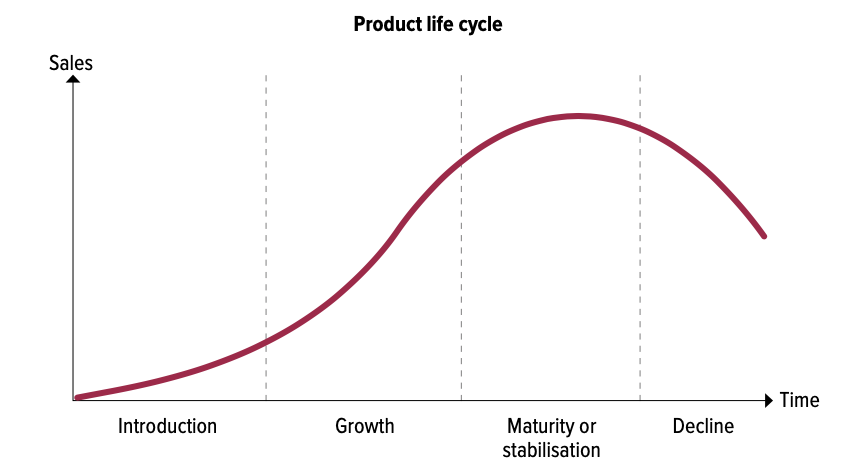
A product has a life cycle, and the marketing strategy to be achieved depends on the state of the product being targeted.

  • Introduction:Increase awareness and reputation
  • Growth:Spread awareness to a broader target audience to promote strong growth
  • Maturity or Stabilisation:Emphasize the differences between the product and other competitive products.
  • Decline:Improve products, update packaging, reduce prices, etc. to extend lifecycle

Components of the Brand

SubstanceConsistently provide the same level of quality and style (little variation from vintage to vintage)
Consumer TrustConsistency builds trust in the brand (a key factor in the success of supermarket own label wines).
Consumer EngagementConsumers themselves will maintain a relationship with the brand, seek out the product by name, and spread the word around (slight changes in labels, etc. risk alienating loyal customers).
Brand StorySuccessful brands have a “story” that consumers can relate to (wine is a product that is relatively easy to tell a story about, and the consumer becomes part of the story).
Price PremiumSuccessful brands are sold at a higher price than other generic products, and the higher price is also seen as a guarantee of quality.
LongeviryMajor brands have a long history and will be around for a long time
Strong Brand NameIn any language, it is desirable to have a distinctive logo with a name that is easy to remember (names with geographical features and the name of the founder tend to be preferred, and it is important to protect these names through trademark registration)
Brand PositionIt is advisable to be aware of where your brand is positioned in the market and avoid highly competitive price ranges (although there are opportunities for high volume sales in cheaper markets)
Private LabelHaving an original label is also important for Supermarkets and Deep Discounters
Components of the brand

There are also the following ways of branding.

  • Ladder Brand
    • Such as Bourgogne, tiers that are easy for consumers to understand under the same brand
      • Accessible:most inexpensive and most frequently purchased(e.g. Bourgogne Rouge)
      • Stretch:Affordable, but purchased only on special occasions(e.g. Gevrey-Chambertin)
      • Aspiration:Top quality wine that represents the brand and is rarely purchased(e.g. Chambertin)
    • Positive Factors
      • The finest wines have the effect of throwing their super premium value across the ladder
    • Negative Factors
      • Not a good match for consumers with low wine knowledge and involvement
      • Impressions of inexpensive wines can become impressions of the brand as a whole
  • Soft Brand
    • Include information on the label that will help the consumer make a purchase (country of origin, geographical indicators such as region, grape variety, wine style).
  • Luxury Brand
    • In addition to the quality of the wine itself, promote luxury in every way possible, such as sponsoring luxury events and being on the lists of high-end retailers and restaurants.

3. Identifying Target Markets

It is necessary to identify the consumers that the product is intended for and to know the wants and needs of that target group.

1. Segmentation

Classify the market on a specific axis and divide it into segments.

Axis of SegmentExamples of Factors
Geographical variablesPlace of residence (country, region, urban/rural area, etc.)
Demographic variablesAge, gender, family structure, income, education level, etc.
Psychographic variablesLifestyle (health-consciousness, liking to eat out, etc.), personality, values and beliefs (vegetarianism, organic orientation), interests, etc.
Behavioral variables・Benefits sought in wine (cost performance, premium wine, etc.)
・Where, how often, and how much wine is purchased
・Level of interest in wine
Axis of Segment

There is no set model for segmentation of wine consumers. One early model is the simple idea of classifying wine consumers into three groups.

  1. Wine lovers:A person with high income and education who has great interest and in-depth knowledge of wine.
  2. Wine-interested:A person of moderate or higher education and income who has an interest in wine and possesses a moderate level of knowledge.
  3. Wine curious:A person with moderate interest in wine but limited knowledge, moderate education and income.

2. Market Research

Market research is about understanding the needs of a particular segment of consumers.

Before conducting market research, it is necessary to clarify the following.

  1. What information you want to get (e.g., how much a segment is willing to pay for a particular wine)
  2. Who do you want to collect the information from (a specific segment or general information)?
  3. How will you conduct the research?
    1. Secondary Research:Analysis based on publicly available data or reports from market research firms
    2. Surveys:A method of gathering information from a large number of people through a set of questions
    3. Focus Groups:Gathering a small group of people and collecting opinions through discussion and comments
    4. Interviews:A method of eliciting in-depth opinions through one-on-one or small group discussions
    5. Consumer Behavior Observation:A method of observing and analyzing the behavior of target consumers in actual sales areas.

4. Set Policy for Marketing Strategy

When conducting marketing, you need to decide on a policy based on five axes.

  1. Direction of marketing strategy
    1. Mass-oriented (undifferentiated):target is the entire market
    2. Niche:products aimed at a specific segment, wine is often a niche product
    3. Multiple:appeal to many segments with one or more products
  2. Aims of Marketing Strategy
    • Aims of Marketing Strategy
    • Launch a new product
    • Improve existing products
    • Increase sales
    • Increase market share
    • Increase brand awareness
    • Attract new consumers, etc.
  3. Target values to be achieved(profit, sales amount, sales volume, market share, etc.)
  4. Time frame for achieving the target
  5. Marketing budget

5. Marketing Strategy Planning

When planning a specific marketing strategy, each element is examined in terms of the 5Ps. (Process and Physical Evidence are not discussed here because they are elements of services.)

  1. Product:製品
  2. Price:価格
  3. People / Person:人
  4. Place:場所
  5. Promotion:販売促進

① Product:製品

Product is the wine itself, including the packaging and branding.

Since the wine market is often described as “saturated,” you need to clearly explain how your product is different from your competitors’ products.

Therefore, the presentation of the product – the bottle, label, and other packaging – needs to be designed to appeal to the target consumer.

② Price:価格

Price is the total amount that a consumer pays for a product, including shipping and other costs.

It also includes the cost of time and effort that the consumer spends to purchase the wine.

Price has a strong influence on consumers when they make purchase decisions. Therefore, the “penetration strategy” of setting a lower price than similar products of other companies and rapidly spreading the product in the market is effective. However, it is not easy to get people to continuously purchase a product when the price of the product is raised.

③ People / Person:人

There are two interpretations of “person,” and both are important.

  1. Target
    • Characteristics and behaviors of target consumers
  2. Staff, partners and customers
    • Cellar Door and Event Sales: Hire and train staff who have sufficient knowledge and can provide appropriate services to customers.
    • Retail sales: It is important to share the image and vision of the producer with distributors and retailers (brochures, videos, website development, etc.)

④ Place:場所

The location where wine is sold depends on the target consumer.

Consumers’ interest in wineWhere to BuyWines to Seek
HighSpecialist Wine Retailers
・Premium Supermarkets
Deep Discounters
・Premium wines
・Lesser-known regions and grape varieties
LowSupermarkets・Inexpensive to mid-priced wines
・Well-known regions and grape varieties
Where to Purchase wines

The wines to be sold and the distribution channels will also vary depending on the maturity of the wine market in a country or region.

Market MaturityStatusExamples
MatureMarkets where wine appears to have reached its potential with stable or declining volumes.Germany, France, UK
EstablishedMarkets with strong historical growth that is tailing off.Italy, South Africa
GrowthMarkets where wine is a mainstream product and/or experiencing growth.USA, Canada, Brazil
EmergingMarkets where wine is experiencing growth and shows potential from a relatively low base.China, Russia, Turkey
New EmergingMarkets where wine is still a relatively new and unknown beverage, but showing some potential.India, Malaysia, Philippines
Market Maturity

⑤ Promotion:販売促進

There are two types of promotion: one is do when the wine is sale, and the other is do outside the time of sale, such as advertising.

All of these promotions related to alcohol sales are regulated by each country, so care must be taken when implementing them.

1. Promotion at the Point of Sale

#PromotionFeaturesMass ProductionPremium
1Price Promotion
価格訴求
➕ Price reduction is a common promotion because price has a great influence on consumers’ purchase decisions.
➖ However, it should be done with caution because of the risk of damaging the image of the product or failing to increase customer loyalty.
×
2Competitions
懸賞
➕ It can encourage the purchase of specific products.
➕ Contact information and other information can be obtained by entering a sweepstakes, and can be used for ongoing promotion.
×
3Limited Edition Packaging
限定版パッケージ
➕ It will improve the image of the brand
➖ Does not improve sales in the long term
4Consumer Tastings
テイスティング
➕ Offering a tasting may increase sales.
➕ It will be more likely to purchase the wine in the future.
××
5Staff Incentives
インセンティブ付与
➕ May increase sales by motivating staff to sell more
※ Illegal in China (considered bribery and unfair competition)
×
6Staff Training
トレーニング
➕ Staff members are encouraged to sell the products themselves and with enthusiasm, which can lead to increased sales.×
Type of promotion at the point of sale
Examples for Price Promotion

In many markets, retailers periodically run some kind of price promotion, the purpose of which is to

  • Expansion of sales of existing products
  • Mass sales and recognition expansion of new products
  • Acquisition of new customers
  • To replace products (sell off old stock or discontinued products)

The actual price promotion can be done in the following ways.

#PromotionFeatures
1Discounts on specific product・Stock clearance of specific products
2Discounts on specific days or seasons・Sales promotion on weekdays when the market is quiet
・Sales promotion during Christmas, etc.
3Discounts for specific groups・Students, military personnel, etc.
4Multi-buy / Volume Discounts・BOGOF(Buy One Get One Free)
※Banned in some countries such as Sweden and Scotland because it is believed to encourage excessive alcohol consumption
5Link-saves
リンクセーブ
・A method of offering a discount on another category of products for the purchase of a certain product or an order of a certain quantity.
e.g., discounts on food when a certain wine is ordered, free delivery when six or more bottles are ordered, etc.
Types of Price Promotion

2. Promotion Away from the point of Sale

#PromotionFeaturesMass-ProductionPremium
1Advertising
広告
Very powerful tool to promote products to a large and wide range of consumers
➖ Can be very expensive, although it depends on the channel (press ads for wine and food are suitable)
2Social Mediaℹ️ Unlike traditional advertising, it is important to interact with consumers (using it only for advertising tends to keep followers away)
± Everyone can easily share their experiences with others.
± Peer reviews are becoming increasingly important in wine buying decisions.
➖ Can lead to negative publicity and reviews
×
3Web Site & Smartphone Appsℹ️ It is essential to create and maintain a website that is attractive and easy to navigate.
ℹ️ SEO measures are necessary to ensure that the site appears at the top of search results.
➕ Producers can communicate with a large number of people around the world.
➖ Hiring consultants and IT experts can be costly
4Reviews & Awards
レビューと受賞
➕ Favorable reviews and high scores by reputable critics can greatly increase wine sales.
➕ Awards and medals can be used in promotional materials and sales.
➕ Greatly influence purchase decisions, especially for less engaged and knowledgeable consumers.
➖ There is a cost associated with participating in competitions and providing bottles of wine (but many producers consider it a worthwhile expense)
5Public Relations
PR
ℹ️ The purpose of PR is to create a positive image of the company among consumers
ℹ️ Brand ambassadors are one of the successful methods (in China, the appointment of key opinion leaders has been successful)
➕ Social and corporate responsibility policies create a positive image for many consumers.
6Sponsorship
スポンサー
ℹ️ Many sporting and cultural events are financially supported by sponsorship deals.
➕ Branding and advertising can be effective if the target audience is aligned.
➖ The appropriateness of linking health promotion activities with alcohol has been questioned, especially in the sports sector.
×
7Wine Tourism
ワインツーリズム
ℹ️ Some wineries offer hands-on events that allow visitors to participate in harvesting and brewing.
ℹ️ Successful wine tourism involving not only wine producers, but also tour operators, restaurants, hotels, and other local tourism businesses.
➕ More opportunities for interaction with general consumers
➕ People who visit producers generally become regular customers and are likely to recommend their wines to others.
➖ High cost of infrastructure and high cost of operation and maintenance
×
8Events & Festivals
イベント・フェスタ
➕ Attracts a wide range of consumers and provides an opportunity to attract new customers.
➖ Costs such as exhibition fees, travel expenses for booth management, and staff costs will be incurred.
➖ Depending on how the event is managed, it may turn into an all-you-can-drink event instead of a tasting.
×
9Free Merchandise
無料商品
ℹ️ Provide wine goods and other promotional goods that are not directly related
➕ Increasing consumer loyalty will lead to future wine sales.
➕ Increasing brand awareness among the people around you, leading to indirect sales promotion.
×
Type of promotion other than at the time of sale
Types and characteristics of advertisements
#Types of AdsFeatures
1TV, Cinema➕ The most powerful advertising campaign and can appeal to a large number of people
➖ Very expensive
2Radio➕ Advertising with a low marketing budget is possible.
➖ Difficult to leave a lasting impression due to the lack of images
3Press Advertisingℹ️ It is important to place ads in the right media.
ℹ️ Some techniques increase effectiveness by having well-known writers write articles (advertorials).
➕ Very effective in telling a detailed story
➕ Low cost
4Billboards➖ Billboard advertising has a limited effect because most people only see it for a short time.
5Digital Advertising➕ Since the number of advertisements published is linked to the advertising cost, it is easy to measure the effectiveness.
➕ Marketing can be done at a relatively low cost.
Types of Advertising

6. Implement and Monitor Marketing Strategies

After planning the strategy, the actual marketing should be conducted and monitored to see if the targeted results are being obtained.

If the targeted results are not being achieved, a decision needs to be made to change the strategy or goals, stop the marketing, or eventually stop selling the product.

There are two ways to measure the effectiveness of marketing: monitoring of targeted figures and surveys to ascertain consumer response. This is called “marketing research”.

  • Create focus groups and ask for direct feedback
  • Eye tracking
  • Viral marketing research

D2-5. Reaching the End Consumer

Other than direct sales by producers, there are two major ways to reach end consumers: retail stores and the hospitality industry.

In many markets, retail sales are much higher, accounting for about 80% of sales in the UK.

1. Retailers

1. Supermarkets

In many markets, Supermarkets have the largest share of wine sales. This makes it a very attractive option for producers who want to sell large quantities of wine.

Advantages・Supermarkets can sell large quantities of wine.
・The ability to sell private label wine (Supermarkets’ own brand) can increase customer loyalty.
・Expertise in quality control, wine styles, etc., can be useful in other sales channels.
・For artisanal producers, this can be an opportunity to expand sales channels.
Disadvantages・Supermarkets have strong bargaining power, resulting in lower selling prices
・Additional promotional costs
・Strict quality control, shipping, and labeling requirements must be met
・Producers risk not being able to continue contracts if they do not meet Supermarkets’ sales expectations (risk of huge inventories)
Advantages and Disadvantages of Supermarkets

2. Deep Discounters

Deep Discounters are retail stores that function like supermarkets, but sell at lower prices. Their characteristic is that they sell products at permanently low prices, and they rarely have limited-time promotions.

  • Profit from thin margins and high sales.
  • Most products are private label.
  • Tend to prefer to deal with minor producers with low overhead costs, including marketing costs (focus on production costs and quality).
Advantages・Deep discounters often buy directly from producers to eliminate intermediate costs.
・Deep Discounters may be more profitable than wholesalers in supermarkets because they do not incur promotional costs.
・Can sell off excess wine inventory.
・Increasing share of sales (In the UK, wine drinkers’ share of buyers has increased from 23% in 2012 to 37% in 2018)
Disadvantages・Producers do not know if they can continue to do business with Deep Discounters.
Advantages and Disadvantages of Deep Discounters

3. Convenience Retailers

Convenience retailers are becoming more and more important as they are more closely connected to people’s lives, operating “anytime” and “anywhere”.

Advantages・Convenience Retailers have more sales opportunities
 ・Long business hours
 ・Close to people’s living areas
・Large chains may have their own brands, handling brands that are popular with local consumers.
Disadvantages・Selling price tends to be higher due to higher cost of store operation
Advantages and Disadvantages of Convenience Retailers

4. Specialist Wine Retailers

Specialist Wine Retailers are retailers that specialize in wine, with some specializing in wines and foods from specific countries. Some are large chains, but most are privately owned or small chains.

Advantages・Consumers who buy at wine specialty stores spend more per bottle (opportunity to sell premium wines)
・High profit margins can be expected due to high prices.
Disadvantages・Specialist Wine Retailers have a small sales volume per store. As a result, they tend to outsource sales to agents, which tends to increase costs.
・Consumer service is costly (stores need to hire highly specialized staff and provide high quality customer service)
Advantages and Disadvantages of Specialist Wine Retailers

Examples of customer service

  • Tell the story of the wine to your customers
  • Provide information on lesser-known regions and varieties
  • Suggest food pairings
  • Build relationships with regular customers to understand their likes and dislikes and then suggest new wines
  • Let customers know when their favorite wines are on sale.
  • Organize events such as tastings and wine classes

5. Hybrids

Hybrids are wine stores with bars and other facilities. Therefore, the store can serve food and drink wine.

AdvantagesTasting wine can encourage consumers with little knowledge of wine to purchase wine.
・Reach out to a wider range of consumers.
・Introduce minor wine regions and varieties
Disadvantages・Longer business hours (need to stay open until late)
・Need to increase the number of customer service staff
・Additional facilities such as a kitchen are required.
・More government offices and procedures
Advantages and Disadvantages of Specialist Wine Retailers

6. Online Retailing

In many countries, online sales are on a significant upward trend. However, its importance varies by country, accounting for 20% of sales in China but only 2% in the US.

Advantages・Retailers can operate out of suburban warehouses, eliminating the need for costly retail stores.
・With lower costs, online retailers can carry more products.
・Can have a larger customer base than brick-and-mortar stores.
Disadvantages・Wine is heavy and bulky, so shipping costs tend to be high.
・There is a risk of loss or damage to the wine when it is transported.
・Consumers tend to demand shorter delivery times, and stores need to be able to meet these requirements.
Advantages and Disadvantages of Online Retailing

It is also necessary to build a website that is reliable and conveys the brand image.

  • Creating an easy-to-use website
    • Detailed descriptions of wines
    • Suggestions for food and wine pairings
    • Comments from staff and wine critics
    • Information on medals won in wine competitions
  • Keep content up to date (new wine arrivals, inventory updates)

7. Global Travel Retails

Global Travel Retails is a store set up at airports and other locations for travelers.

Advantages・Consumers (tourists) have more time to look at products.
・Travelers tend to seek out high-priced products that are not available in their home country (opportunities for premium wine sales)
Disadvantages・Free trade agreements have reduced the importance of tax exemptions.
・High cost of retail space results in low profit margins
Advantages and Disadvantages of Global Travel Retails

8. Wine Investment Companies

Wine Investment Companies specializes in the procurement and sale of wine for investment.

Investment companies buy wines that fetch very high prices due to their rarity, either through producers or vendors, and sell them to customers. In effect, some companies act as brokers.

  • London: Traditionally a center for wine investment, with many leading wine investment companies based in London.
  • China: In 2008, the Hong Kong government abolished excise duties on wine in an effort to become the “hub of the East Asian wine trade,” and investment has intensified.

2. Hospitality Sector

The average price of wine sold in the hospitality industry is often higher than in retail stores. While the volume of wine sold in the hospitality industry is 20%, the value of wine sold in the hospitality industry is nearly 40%.

1. Bars

In terms of wine, it can be categorized into two types: wine-specific bars and general bars.

Specialist Wine Bars・Similar to wine specialty retail stores
・Target consumers are people “high involvement” in wine
Many stores focus on a specific country or style of wine.
・They tend not to offer famous brand wines, as they are not price competitive, they tend to carry wines from smaller producers
General Bars・Wine is just one of the beverages served.
・Wine is usually produced by large companies and is from well-known regions and varieties.
・Mostly inexpensive or moderately priced wines with a wide range of appeal.
Types and Features of Bars

2. Restaurants

Restaurants can be classified according to the purpose of the meal itself, and the quality of the wine they serve depends on its importance.

Non-Destination Restaurants・Restaurants that are not primarily for dining (e.g., between theaters, movies, after-work meals, etc.), often chain restaurants.
・General Bars as well, mostly inexpensive to moderately priced wines of well-known regions and grape varieties.
Casual Dining・Restaurants used for a wide range of occasions, from casual dining to long hours, many of which are privately owned or small chains
・Mostly medium to premium priced wines.
・In addition to wines from well-known regions and varietals, there is often a mix of lesser-known wines.
・Staff are trained to advise customers on wines based on their preferences, prices, and food pairings.
Fine Dining・Food is the destination, and the food and experience at the restaurant is the reason for the visit.
・Food and wine pairing is very important, and super premium wines are available in limited quantities.
・Being on the wine list is a source of great pride for producers.
・Wine is difficult to obtain, so it is generally purchased through an intermediary.
Types and Features of Restaurants

3. Special Market Environments

In some countries, alcohol sales are strictly regulated, and in such countries, a special market has been formed.

Typical markets are the national monopoly market and the three-tier system in the US.

1. Monopoly Markets

In the Nordic countries and Canada, the government has a monopoly on the retail sale of alcoholic beverages.

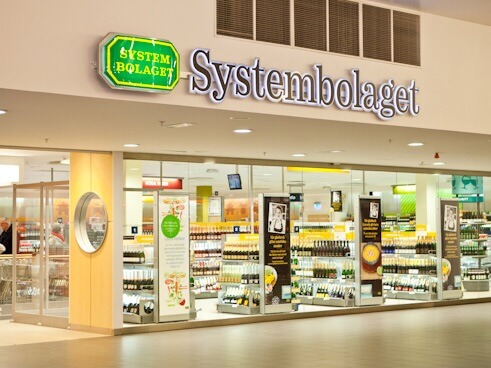
  • Sweden: Systembolaget, a government-owned chain, is the only retail outlet that can sell alcohol
  • Ontario, Canada: fully controlled by the Liquor Control Board of Ontario (LCBO)

The purpose of monopoly sales is to limit the consumption of alcohol, which has the following systems and impacts.

  • High taxes on alcoholic beverages, making them very expensive
  • There is no incentive to advertise or lower prices.
  • Wine purchasing is very complicated due to the bureaucratic system. However, since the final decision is based on quality alone, it may be adopted regardless of the size of the producer.

2. The USA’s Three-Tier System

In the U.S., the distribution and sale of alcoholic beverages is governed by strict and complicated laws in each state. Therefore, doing business with alcohol in the US is not an easy task.

Vendors are grouped into three tiers, and cross-ownership between retail and other tiers is limited or completely prohibited.

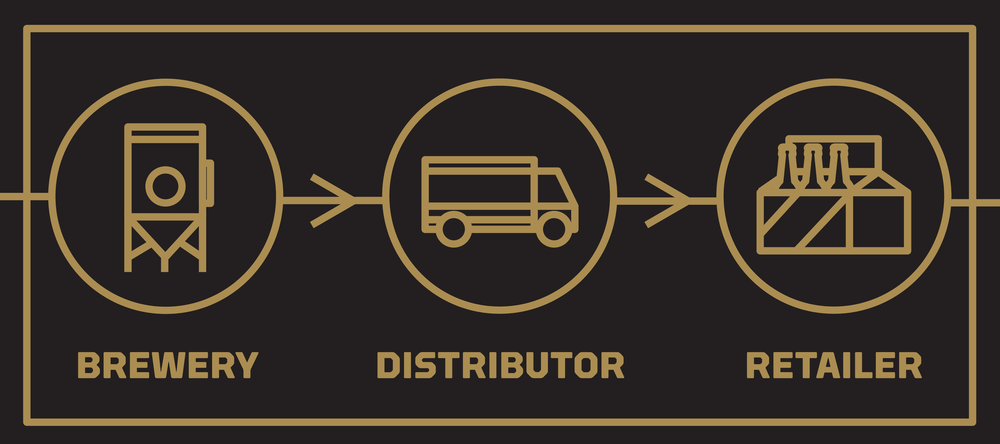
  1. Suppliers: including producers and importers
  2. Distributors: including wholesalers and brokers
  3. Retailer: including retailers and HoReCa

This law is a remnant of Prohibition, which was repealed in 1933, and is designed to avoid a return to the pre-Prohibition era. (Gambling, known as saloons. Prostitution, crime, intoxication, etc.)

For this reason, in principle, producers cannot sell directly to consumers without going through a wholesaler. However, more and more states are allowing direct sales to consumers.

Depending on the severity of the regulations, the states are divided into three categories.

  • State direct involvement in alcohol sales
    1. Control State
      • State has a monopoly on one or more of the three tiers
      • There are 17 states
  • No direct state involvement
    1. Open State
      • Little involvement in regulation
    2. Franchise State
      • Franchise laws severely limit changes in Distributors
      • Appointment of Distributors is almost always “lifetime” and cannot realistically be changed (because sudden changes in Distributors by Suppliers can be devastating)

D2-4. Sales Method

Wine sales are usually divided into two main areas: retail and customer service.

It is advisable for producers to combine several methods in order to spread the risk in case one method does not work.

1. Selling Directly to Retailers

Advantages・Producers can maximize their profits because there are no intermediate costs or margins.
・Producers can control their brand image.
Disadvantages・Producers will have an increased operational burden (transportation, shipping, payment of import taxes, legalization of labels to match the country of export)
・Producers are at risk of financial loss due to the possibility of bottles being lost or damaged in transit.
・Need to develop own retail outlets in the market and understand consumer preferences and laws of the exporting country.
Advantages and Disadvantages of Selling Directly to Retailers

These disadvantages can be solved by using a distributors, but of course this will incur costs and thus reduce profits.

2. Appoint a Distributor

The scope of work of the Distributor varies, and the following are some of the differences among the vendors.

  • Base of operations (same country as the producer / overseas)
  • Stock holding (holding inventory / not holding)
  • Possession of exclusive or preferential import and sales rights

In addition, depending on the scope of business, there are various designations such as “importer”, “distributor”, and “wholesaler”.

AdvantagesProducers can
・reduce operational workload
・access to market knowledge and connections
・find the right retailers for them
・delegate marketing
・reduce risk in transportation
Disadvantages・Margins and fees will be incurred
・It takes time and effort to find the right distributors.
・Inability to control sales, marketing and branding
Advantages and Disadvantages of Distributors

3. Establish a Joint Venture

In the wine industry, joint ventures have been established between companies at different stages of the supply chain in order to reduce intermediate margins.

Advantages・Companies will be able to increase their profits by eliminating intermediate costs.
・Investment can increase the attractiveness of wine (especially for small producers) as they have more money to invest.
Disadvantages・Companies need to take the time and effort to carefully and clearly select partners.
・Responsibilities and obligations need to be clearly defined among partners.
・Compared to agency contracts, it is more difficult to switch contracts when things go wrong.
Advantages and Disadvantages of Joint Venture

4. Use a Broker

A Broker is an independent intermediary who does not represent either the seller or the buyer, but whose role is to “make the deal happen” without conducting the actual transaction. (Distributors are paid by the producer to sell the wine.

Advantages・Brokers have in-depth and specialized knowledge of specific markets
・Lower commissions than distributors
・Brokers play an important role in the trade of fine wines (in Bordeaux, brokers have legal status as courtier gorumet (wine appraisers) and play an important role in mediating between chateaux and negociants)
Disadvantages
Advantages and Disadvantages of Joint Venture

5. Selling Directly to Customers

Recently, more and more producers are selling their wines directly to consumers.

As with direct sales to retailers, producers are able to maximize profits and control sales, but face an increased workload.

1. Cellar Door Sales

Cellar Door Sales is a method of selling wine directly to consumers who visit Estates and Wineries.

AdvantagesThe following benefits can be expected due to the ability to engage directly with consumers.
・Increase brand awareness and loyalty (increase LTV and lead to repeat sales)
・Free marketing through word of mouth
・Market research through direct feedback during new product development
Disadvantages・Costs for cellar door locations, operating costs, etc.
Advantages and Disadvantages of Cellar Door Sales

2. Events

Events is a way to interact directly with consumers by setting up stalls at tasting fairs and wine and food festivals.

Advantages・Reach out to a larger and broader audience
Disadvantages・Additional costs and labor will be required (store opening costs, travel expenses, operating costs, etc.)
・Competition with other producers
Advantages and Disadvantages of Events

3. Wine Clubs

Wine Clubs are a way to have your own membership club, and to give priority to members for wine information and sales.

AdvantagesBasically the same as Cellar Door
Disadvantages・Additional costs and time are required for marketing (e.g., newsletter, shipping of wine).
・Risk of loss or damage to wine in transit
・Legal restrictions (some states in the US prohibit direct sales by producers)
Advantages and Disadvantages of Wine Clubs

4. Online

Online selling is a method of selling directly to consumers through the Internet.

AdvantagesBasically the same as Cellar Door
Disadvantages・Producers need to create and maintain websites that are convenient and well-designed, which will ultimately lead to increased costs and workload (differentiation from other producers’ websites is essential).
Advantages and Disadvantages of Wine Clubs

D2-3. Type of Producer

Route to Market, the start of a bottle of wine’s journey to the consumer, is the producer. This section summarizes the different types of business that producers have.

1. Estates

Estates produces wine from grapes grown in its own vineyards (including leases).

Advantages・Ensuring quality control at every stage
・Monopolize the profits from wine production
・Easier to tell the “story of the wine” (stronger appeal to consumers who want the “real thing”)
Disadvantages・High capital and cost.
・Producers are vulnerable to the impact of unseasonable weather conditions on production volumes, which may reduce profits. (Large-scale Estates have the advantage of being able to spread the risk and cost.)
Advantages and disadvantages of Estate

2. Growers

Growers only grow grapes.

Advantages・Growers can concentrate on growing grapes (no need for winemaking, sales, or marketing)
・Cash inflow is fast, which is advantageous in terms of cash flow.
Disadvantages・The risk that the selling price of grapes will fall due to changes in vintage or fluctuations in supply and demand, resulting in lower profits.
Advantages and disadvantages of Growers

There are also two ways to sell grapes.

How to sell grapesAdvantagesDisadvantages
Contract with a specific producer or merchantGrowers will have stable management and mental peace of mind.There is a risk of reduced profits if Growers fail to meet quality standards.
Sold on the spot marketCan be sold at a higher price in case of grape shortageMay be less expensive than contracted price.
How to sell grapes

3. Grower-Producer

Advantages
Disadvantages
Estateのメリット・デメリット

4. Merchants:商人

Merchants mainly buy wine and sell it under their own name. However, involvement in winemaking varies from region to region, with Merchants generally providing technical support for viticulture and winemaking.

Advantages・Merchants do not need to purchase and manage vineyards, so they can operate with little capital (this is especially useful in areas where land is expensive).
・Flexibility to purchase grapes even in a bad year.
Disadvantages・Merchants have little control over the quality of the wines they buy.
→ To some extent, this can be eliminated by Merchants building cooperative relationships with producers.
・There is a possibility that the wine to be purchased will be expensive.
Advantages and disadvantages of Merchants

En Primeur(プリムール)

En Primeur is a method of selling wine before it is bottled.

The system developed in Bordeaux after World War II, when the chateau was struggling financially.

Merchants buy the wine in barrels before it is bottled, and the wine is aged and stored by the producer until it is ready for bottling.

Merchants act largely as wholesalers, buying a portion of the chateau’s stock and selling it to various distributors and retailers.

This often involves wines that are only available at En Primeur, and which are valued by investors.

5. Grower-Merchants:生産者&商人

Grower-Merchants have two sides: Estates and Merchants. In other words, they make wine from their own vineyards, but they also buy and sell the wine.

Grower-Merchants deals in wines of all price ranges, with premium wines produced from their own vineyards and inexpensive and mid-priced wines often purchased.

6. Co-Operatives:協同組合

Co-Operatives are associations made up of groups of producers who produce and sell wine from grapes grown by their members.

Advantages・Members can purchase expensive equipment through joint investment.
・Cooperative members can outsource marketing, packaging, and distribution (especially marketing, which is more efficient and effective than doing it individually).
・The cooperative can produce entry-level wines, while producing higher-end wines under its own brand.
・Large cooperatives are able to generate economies of scale.
Disadvantages・Cooperatives are often democratically managed, which makes the decision-making process slow and cumbersome.
・Cooperatives and producers may not have the same course of action.
Advantages and disadvantages of Co-Operatives

7. Custom Crush FacilitiesとVirtual Winemakers/Wineries

Custom Crush Facilities is a type of cooperative model, mostly found in California. They are contract winemaking companies that produce wines at the request of producers, ranging from inexpensive mass-produced wines to super-premium, low-volume production.

Virtual Winemakers/Wineries are producers who use Custom Crush Facilities or other winery facilities to produce wine.

Advantages・Producers who outsource the production of wine do not need to invest in equipment.
・No need for consensus building for decision making, which is a disadvantage of cooperatives.
・They can draw on the expertise and skills of professional winemakers.
Disadvantages・There is a risk that the style desired by the producer will not be clearly communicated to the winemaker, and the wine will not be what they are aiming for.
Advantages and disadvantages of Custom Crush Facilities

8. Conglomerates:複合企業

Conglomerates are companies that deal not only in wine but also in a variety of alcohol products, and there is a growing trend for major companies outside the wine industry to enter the market.

By owning many small and medium-sized companies at various stages of the supply chain, from production to distribution and sales, they reduce the middleman margins.

Conglomerates retain a great deal of scale and influence, which allows them to have strong bargaining power when purchasing grapes and wine and selling them to retailers.

Examples of conglomerates

  • Large company: E&J Gallo (California, USA)
    Responsible for 40% of CA wine production in 2018 and about 22% volume of the US wine market in 2020
  • Medium company: Michele Chiarlo (Piemonte, Italy)
  • Small company: Felton Road (Central Otago, NZ)

D2-2. Costs in the Supply Chain

A single bottle of wine is sold at a retail price that covers the costs of all stages of the supply chain.

Along with viticulture and winemaking, it is important to choose what options are available at all stages of the supply chain.

The costs of viticulture and winemaking are very important because of their high weight. Viticulture costs account for around 70% of the total cost, while winemaking costs account for 15-25%.

This ratio is the same for many wines.

  • Inexpensive and Premium wines.
  • Growing grapes on your own farm, and buying grapes.

1. Grape Growing

The cost of viticulture is largely divided between the establishment and operation of the Vineyard.

1. Vineyard Establishment

To establish a vineyard, land must be purchased and vineyards must be developed.

1. Buying or Renting the Land

The first costs are related to the purchase or lease of vineyard land, and the price of land varies greatly depending on a combination of factors.

  • The environment of the land for growing high quality grapes
  • Appellation Names
    • In California, the price of land in the Napa Valley is about 10 times that of the Central Valley.
    • In Bordeaux, the price of land in the exclusive Médoc region can be more than 100 times the price of a typical AOC Bordeaux.
  • Scarcity of Land
    • Prime land in Champagne rarely comes on the market, and when it does, it is at a very high price.

2. Preparing the Vineyard

A lot of preparation is required before a vineyard operation can be started, and the costs can be high.

In addition, vines require a large amount of capital because it takes at least three years from planting to harvesting grapes that can be used for wine production.

  • Surveying to determine if the land is suitable for viticulture and for which grape varieties (e.g. taking soil samples)
  • Land preparation
  • Divide the vineyard into plots and create access roads
  • Installation of trellises
  • Construction of irrigation systems in dry areas
  • Protection from weather hazards (windbreaks, frost protection, etc.)
  • Purchase of machinery, equipment, etc. and construction of a garage to store them

2. Vineyard Management

Once a vineyard is established, there are operating costs involved in growing grapes of the desired quantity and quality.

  1. Labor
    • There is a balance between the cost of labor and the cost of purchasing machinery.
      • When the cost of labor is low (as in Chile), there is less incentive to invest in capital-intensive equipment.
      • When labor costs are high (as in Coonawarra), the incentive to invest in machinery becomes more favorable.
  2. Materials
    • Materials needed to repair trellises and consumables such as gloves, pruners, etc.
  3. Treatment in the vineyard
    • Fertilizers and pesticides (herbicides, fungicides, insecticides, etc.)
      → Integrated pest management can reduce usage fees
  4. Water
    • Cost of rights to draw water or purchase water if irrigation is required
  5. Electricity
    • Cost of electricity needed for irrigation systems, frost protection equipment, etc.
  6. Insurance and depreciation
    • Insurance against natural disasters
    • Depreciation costs for equipment and machinery established or added to the vineyard

2. Winemaking

As with vineyards, winemaking requires capital costs to establish a winery, as well as operating costs.

1. Winery Establishment

  1. Cost of land to build a winery
  2. Cost of building the winery
  3. Cost of purchasing equipment, machinery, and production lines for brewing (presses, tanks, pipes, pumps, refrigeration equipment, aging containers, bottling lines, etc.)

2. Winemaking Costs

  1. Cost of purchasing grapes (if you do not own a vineyard)
  2. Labor
    • (Unlike vineyards) often employ a small number of skilled staff on a full-time basis
    • Temporary labor may be hired for unloading grapes and moving equipment during harvest.
  3. Winery Materials
  4. Running costs for Machinery and Equipment
    • Fuel, electricity, maintenance costs, etc.
  5. Water
    • Large amounts of water are used for cleaning (in areas where water is expensive, some wineries invest in water treatment facilities)
  6. Electricity
    • Large costs for refrigeration and ventilation, as well as electricity for presses, pumps, lighting, etc. (Some wineries have installed solar panels to reduce costs)
  7. Maturation
    • Storage space is required for aging at the winery
    • New oak barrels are very expensive (old barrels provide little or no oak-derived aroma, oak chips are cheaper but increase costs)
  8. Packaging
    • Bottles, closures, labels, cartons, pallets, and other materials are needed. (Unusual shaped bottles/labels will increase costs.)
    • Bottling line equipment or other winery equipment usage fees
    • Label design fees
  9. Depreciation
    • Depreciation of equipment and machinery used in the winery.

3. Transportation

There are two main methods of transporting wine.

Transport methodFeauturesLoading capacity in shipping containers
Transportation of bottled wine・This is a common method of transportation, and is often used by companies that specialize in wine transportation.
・The price is higher, but the quality of the wine is maintained through the use of temperature-controlled shipping containers.
9,000〜10,000L
Bulk transportation・A method of transporting wine in tanks or barrels that is inexpensive and environmentally friendly.
・It is a cheap and environmentally friendly method of transport.
There are cost advantages when selling more than 15,000 cases of the same wine.
・As of 2019, it accounts for 34% of the world’s wine, but only 8% in value terms.
25,000L
ワインの輸送方法

1. Transportation of Wine in Bottle

There are four transportation methods, which are used in different ways for different routes.

Transport methodFeaturesUse application
AirVery high transportation costs (as wine is very heavy for its size and value)・When sending to a competition
・When sending very expensive wines
・When the deadline is important (Beaujolais Nouveau market in Japan)
RoadIn most cases, the first and last step is road transportation. It can be carried directly to the delivery destination and is suitable for short distance transportation.Short-distance transportation
・Efficient when trucks can get on and off the ferry directly, such as in strait hauling
RailContainerization may reduce transportation costs. (Transposition of pallets is costly.)・Mass transit between continents
SeaThe most common and inexpensive way to transport goods over long distances. The disadvantage is that it takes a long time to transport.・Long-distance transportation across continents
How to transport a bottle of wine

2. Bulk Transportation

  • Bulk wine transport methods
    1. Plastic flexitanks typically installed inside standard shipping containers (up to 24,000L)
    2. ISO tanks installed (up to 26,000 liters)
  • Volume of bulk wine transported
    • 2001:23% → 2010:43% → 2019:34%
    • Spain, USA, South Africa, Australia and Chile account for more than 40% of exports (55% for Spain)

4. Importation

When selling wine in other countries, there is generally a customs duty and a margin for the distributor. While there is an option of not using a distributor, many producers use a distributor because of the need to understand the laws of the destination country and deal with labeling and other issues.

  • Import Duties
  • Margins to Distributors
    • Compliance with laws of the exporting country
      • Labeling of alcohol content (USA allows for a 1.5% margin of error, but the EU requires labeling of the closest alcohol content)
      • Labeling of health warnings (required in the USA, but not in EU)

5. Sales

  • Property Costs
    • Both retail and hospitality businesses require a building to operate in, which generally tends to be expensive
    • Online-only retailers are able to keep costs down because warehouse space is less expensive
  • Labour
    • The skills and expertise of the staff required vary greatly by business type
      • Supermarkets: No need for highly specialized staff
      • Specialist Wine Retailers: need to have knowledge of wine and be able to give advice to customers.
      • Restaurants: Particularly in upscale restaurants, a high level of wine knowledge is required, as well as the ability to select wines for the list and provide detailed advice to customers.
  • Equipment and Materials
    • Retailers: accounting systems, refrigerators, display shelves, cleaning equipment, etc.
    • Hospitality: In addition to the above, cooking equipment, tableware and glasses, expensive wine storage systems, etc.
  • Storage Costs (Where to store wine)
  • Delivery Costs
  • Margin at the point of Sale
    • Retailers : 30〜50%
    • Hospitality : 50〜67% (a glass of wine is even more expensive because of the risks involved.)

6. Marketing

詳細は D2-6. マーケティング を参照

  • Labour
    • Large producers: In-house marketing team
    • Small to medium producers: external marketing firm or industry association
  • Design and production of bottles and labels
  • Marketing campaign

7. Fluctuations in Currency

The impact of currency fluctuations on the price of wine is significant, and there are several ways to mitigate it.

How to reduce currency riskTrading MethodsFeatures
OptionAgree on the price and quantity of wine to be purchased in advance, and determine if the importer will purchase the wine at the agreed upon time.・Producers may be able to set higher prices while risking unsold wine
・Importers can postpone their decisions.
Price fixed in importer’s currency at time of orderSet the price in the importer’s currency (usually the price is fixed in the producer’s currency)・Producers are exposed to foreign exchange risk (producers do not know the price until they sell)
・Importers may be charged a premium by producers.
Currency hedgingBuy and hold currency in advance to be able to respond to orders from specific countries.Importers are required to have the skills to manage currencies (and are therefore generally limited to large companies)
Trading in major currenciesTrade in the stable US dollar and euro, not in the currencies of unstable countries.Attractive to both producers and importers (more stable exchange rates, fewer currency conversions)
Transactions in local accounts and local currenciesOpen a bank account in the country where the transaction will take place and trade directly in that country’s currency.Holding a large amount of funds in foreign currency may prevent effective use of funds.
How to reduce currency risk

D2-1. Supply and Demand for Wine

1. Changes in the Wine Market

  • World wine consumption rose rapidly in the early 2000s.
  • After the global financial crisis in 2008, it began to decline.
  • Sparkling wines consumption has increased by an average of 3% annually between 2002 and 2018.
  • Wine consumption has declined significantly in countries where wine is traditionally consumed. (e.g., France, Italy)
  • In 2011, USA became the world’s largest wine consumer.
  • China has seen a significant increase in wine consumption over the past 20 years as its middle class has grown.

2. Supply and Demand

Capture the market with PESTEL, a framework for analyzing the external environment.

  • Political:政治
  • Economic:経済
  • Social:社会
  • Technological:技術
  • Environmental:環境
  • Legal:法律・制度

1. Demand

NoAreaFactors influencing
1PoliticalGovernment campaigns on the health effects of alcohol.
Decreased availability of cheap wine : government control of overproduction
± Changing Consumer Preferences : increased demand for low-alcohol wines and decreased demand for fortified wines.
± Changes in Reputation : wine’s reputation with critics and influencers.
± Changes in Spending Patterns : lower prices due to increased competition in price-sensitive markets (Germany, UK), premiumization of consumer behavior (USA).
2Economic± Strength of the Economy : Changes in the level of consumers’ disposable income.
± Fluctuations in Currency Exchange : The Risk of (1) lower sales and (2) lower profits caused by a decrease in competitiveness due to a rise in the value of a currency, or the opposite effect, offsetting profits due to import prices of consumption goods.
± Changes to the Market : Entry or exit of new firms or products.
3SocialYoung people drinking less wine
Changes in Lifestyle : Shorten meals and limit alcohol consumption during work hours.
4Technological
5Environmental
6LegalLaws Prohibiting or Limiting the Sale of Alcohol : In many countries there is a minimum drinking age and restrictions on the hours of sale.
Government Policies to Reduce Alcohol Consumption : Enforcement of laws aimed at reducing the amount of alcohol consumed by the population.
e.g.
・France:Loi Evin (ban on TV and cinema advertising of alcohol) enacted in 1991.
・Scotland:Minimum unit price introduced for the first time in the world in 2018.
・BAC:NZ, Scotland:reduced to 50mg/100mL, Norway, Sweden: 20mg/100mL (30mg/100mL in Japan).
Taxaion : Imposition of taxes and duties on alcoholic beverages (Hong Kong abolished excise duty in 2008 with the aim of becoming the “hub of wine trade” in East Asia).
International Trade : Many countries impose tariffs on imported goods (protectionist policies to promote the sale of domestic products).
± Wine Laws : GIs are increasing worldwide to improve branding and recognition.
PESTEL Affects Demand for Wine

2. Supply

NoAreaFactors Influencing
1Political➖ Vine Pull SchemesPulling of poor quality vines as a measure against overproduction.
± EU restrictions on Planting new Vinyardse.g. EU allows planting up to 1% annual growth rate from 2016 onwards, increasing the area planted in France and Italy.
2Economic± Conversion of Vineyard Land to Other UsesConversion to higher value crops.
e.g. Elgin, South Africa from grapes to apples, California from almonds to pistachios.
3Social Abandonment of Rural areasDeclining human resourcesavailable to work in the vineyards and lack of investment in the local economy.
4Technological± Introduction of Modern TechnologyModernization of vineyard management and winemaking techniques to achieve mass production of high quality wines.
e.g., average production in Spain has increased despite a decline in vineyards.
5Environmental± Natural FactorsChanges in wine production due to year-to-year changes in weather.
e.g.
・France : In 2017, devastating spring frosts and hailstorms combined with a heat wave had a significant impact.
・South Africa, California, Chile : Water shortage due to severe drought.
6LegalLimitations by PDOLimitation of cultivable area and yield.
PESTEL Affects Apply for Wine

The purpose of PDO and its impact on wine production

Purpose of PDO

  1. Define the style of wine produced in a particular region.
  2. Match supply and demand to reduce the risk of downward price pressure.

Impact of PDO on Wine Production

  • Expansion of production areas into unsuitable areas when demand for a particular wine is rising, resulting in a decline in overall quality.
  • Strict PDO regulations make it impossible to remain competitive against wines from less regulated areas.
    e.g. the introduction of the Vin de Pays system in the 1970s led to a significant increase in production and quality.

D2 – 6. マーケティング

マーケティングの最終目的は、決められたスケジュール・予算の中で適切なレベルの利益を達成すること。

1. マーケティング目標の設定

目標は、個人の直感や夢・願望を起源とする場合もあり、重要なことはその実現可能性である。

できるだけ具体的な目標を設定し、その実現可能性を調査と分析によって明らかにする必要がある。

SWOT分析

目標の実現可能性を分析するためのフレームワークとして、SWOT分析がある。

プラス要素マイナス要素
内的要因Strengths:強みWeaknesses:弱み
外的要因Opportunities:機会Threats:脅威
SWOT分析

内的要因:強みと弱み

外的要因:機会と脅威

外部のビジネス環境を考えるときは、PESTELで分析する。

分野影響内容
Politics消費を抑制するための禁酒法・税の導入
優れた商品への助成金などのプロモーション支援
Economic為替による輸出品の価格競争力の向上
為替による輸入機器・資材の購入コスト増
Social親世代が好んでいた酒類の回避
地方の労働力不足
Technological新しい生産技術・設備・分析機器による品質向上
地域の独自スタイルの喪失
Environmental±気候変動による影響(スタイルが確立している地域では脅威、冷涼エリアでは機会)
Legal生産規定による、製品のブランディング強化
生産規定による、生産者の選択肢の制限
PESTELによる外的要因の例

これらの分析の結果、最終的に目標達成の可能性に対する結論を出す。

2. 対象とする製品・ブランドの特定

プロダクトにはライフサイクルがあり、対象とする製品の状態によって達成するべきマーケティング戦略が異なる。

  • Introduction:認知度や評判を高める
  • Growth:強い成長を促すために、より広範なターゲットに認知を広げる
  • Maturity or Stabilisation:他の競合製品との違いを強調する
  • Decline:ライフサイクルと延長するために、製品の改良、パッケージの更新、価格の引き下げなどを行う

ブランドの構成要素

Substance
本質
常に同じレベルの品質とスタイルを提供する(ヴィンテージによる変動が少ない)
Consumer Trust
信頼
一貫性があることでブランドへの信頼感が高まる(スーパーマーケットの自社ブランドワインが成功するための重要な要素)
Consumer Engagement
エンゲージメント
消費者自身がブランドとの関係を保ち、By Nameで求め、周囲に拡散してくれる(ラベルなどのわずかな変更がロイヤルカスタマーを遠ざけるリスクを持つ)
Brand Story
ストーリー
成功するブランドには、消費者が共感する「ストーリー」がある(ワインは比較的ストーリーを語りやすい製品であり、消費者もストーリーの一部になる)
Price Premium
価格プレミアム
成功しているブランドは、他のジェネリック製品よりも高い価格で販売され、価格の高さも品質の保証とみなされている
Longeviry
長寿命
主要ブランドは、長い歴史を持ち、長く存続する
Strong Brand Name
強力なブランド名
どの言語でも、覚えやすい名前で特徴的なロゴマークを持つことが望ましい(地理的な特徴を持つ名前や、創業者の名前が好まれる傾向にあり、商標登録によって保護することが重要)
Brand Position
ポジション
ブランドが市場の中でどこに位置するかを意識し、競争の激しい価格帯を避けることが望ましい(ただし、安価な市場には大量販売のチャンスがある)
Private Label
プライベート・ラベル
Supermarkets、Deep Discountersではオリジナルのラベルを持つことも重要
ブランドの構成要素

また、次のようなブランディングのやり方がある。

  • Ladder Brand
    • Bourgogneのように、同一ブランドで消費者に分かりやすい段を付ける
      • Accessible:最も安価で購入頻度が多い(e.g. Bourgogne Rouge)
      • Stretch:手頃だが、特別な時に購入する(e.g. Gevrey-Chambertin)
      • Aspiration:ブランドの最高級ワインで、購入することはほとんどない(e.g. Chambertin)
    • プラス要素
      • トップラインは、そのスーパープレミアムの価値を梯子全体に投げかける効果がある
    • マイナス要素
      • ワインの知識・関与度の低い消費者とは相性が悪い傾向がある
      • 安価なワインの印象がブランド全体の印象になる場合がある
  • Soft Brand
    • 商品を優先して購入する手掛かりになる情報(原産国、産地などの地理的指標、ブドウの品種、ワインのスタイル)
  • Luxury Brand
    • ワインそのものの品質に限らず、高級イベントのスポンサーになる、高級小売店・レストランのリストに載るなど、あらゆる手段で高級感をアピールする

3. ターゲット市場の特定

製品がどのような消費者を対象としているかを特定し、そのターゲット層の要望やニーズを知る必要がある。

1. セグメンテーション

市場を特定の軸で分類し、セグメントに分割する。

セグメントの軸
地理的変数居住地(国、地域、都市部・農村部など)
人口統計学的変数年齢、性別、家族構成、収入、教育水準など
サイコグラフィック変数ライフスタイル(健康志向、外食好きなど)、パーソナリティ、価値観や信念(ベジタリアン、オーガニック志向)、興味など
行動変数・ワインに求めるベネフィット(コストパフォーマンス、プレミアムワイン)
・ワインの購入場所、頻度、量
・ワインへの関心度
セグメンテーションの軸

消費者のセグメンテーションに決まったモデルはなく、初期のモデルとしてワイン消費者を3グループに分類する試みがある。

  1. ワイン愛好家:ワインへ大きな関心と深い知識を持っている、高収入・高学歴の人
  2. ワインに関心のある人:ワインに関心があり、適度な知識を保有している中程度以上の学歴と収入がある
  3. ワインに興味がある人:ワインに中程度の関心はあるが知識は限られており、中程度の教育と収入がある人

2. 市場調査

市場調査は、特定のセグメントの消費者が何を必要としているかを理解すること。

市場調査を行うときには、次のことを明らかにしておく必要がある。

  1. 得たい情報は何か(あるセグメントが、特定のワインにどのくらいの価格を支払うか)
  2. 誰から情報を集めるか(特定のセグメントか、一般的な情報か)
  3. どのように調査を行うか
    1. セカンダリーリサーチ:公開データ、市場調査会社のレポートを元に分析を行う方法
    2. アンケート調査:大勢の人から、一定の質問を通して情報を集める方法
    3. フォーカスグループ:少数人グループを集め、議論やコメントによって意見を集める方法
    4. インタビュー:1対1、もしくは少人数で話すことで、深く意見を引き出す方法
    5. 消費者の行動観察:実際の売り場などで、ターゲットとなる消費者の行動を観察・分析する方法

4. マーケティング戦略の方針設定

マーケティングを行う際は、5つの軸で方針を決める必要がある。

  1. マーケティング戦略の方向性
    1. マス向け(差別化されていない):ターゲットは市場全体
    2. ニッチ:特定のセグメントに向けた製品で、ワインは多くの場合ニッチ製品である
    3. 複数:1つの製品、または複数の製品で多数のセグメントに訴求する
  2. マーケティング戦略の狙い
    • 新製品の発売
    • 既存製品の改善
    • 売り上げの拡大
    • マーケットシェアの拡大
    • ブランド認知度の向上
    • 新しい消費者の獲得 など
  3. 達成すべき目標数値(利益、売上金額、売上本数、市場シェアなど)
  4. 目標達成までの期間
  5. マーケティングの予算

5. マーケティング戦略の立案

具体的にマーケティング戦略を立案する際には、5Pでそれぞれの要素を検討する。(ProcessとPhysical Evidenceはサービスにおける要素であるため、ここでは取り上げない)

  1. Product:製品
  2. Price:価格
  3. People / Person:人
  4. Place:場所
  5. Promotion:販売促進

① Product:製品

パッケージ・ブランディングを含む、ワインそのもの。

ワイン市場はしばしば「飽和状態」と表現されるため、競合他社の製品とどのように違うかを明確に説明する必要がある。

そのため、製品のプレゼンテーションであるボトルやラベル、その他のパッケージは、ターゲットとなる消費者にアピールするようにデザインされる必要がある。

② Price:価格

配送料などを含む、消費者が商品に対して支払うトータル金額のこと。

また、消費者がワインを購入するために費やす、時間や労力などのコストも含まれる。

消費者が購入の意思決定を行う際に、価格は強い影響力を持つため、他社の類似製品よりも低い価格設定で、急速に市場に普及させる「浸透戦略」は有効である。ただし、製品の価格を上げたときに、継続的に購入してもらうことは容易ではない。

③ People / Person:人

人には2つの解釈があり、どちらも重要である。

  1. ターゲット
    • ターゲットとする消費者の性質や行動
  2. スタッフ・パートナー・顧客
    • Cellar Doorやイベント販売の場合:スタッフへ十分な知識とサービスのトレーニングを行う必要がある
    • 小売販売の場合:Distributorsや小売店に、生産者のイメージやビジョンを共有することが重要(パンフレットや動画、Webサイトの制作など)

④ Place:場所

どこでワインを販売するかは、ターゲットとする消費者によって変わる。

消費者のワインへの関心購入する場所求めるワイン
高いワインの専門店
・プレミアムなスーパーマーケット
Deep Discounters
・プレミアムワイン
・あまり知られていない地域やブドウ品種
低いスーパーマーケット・安価から中価格帯のワイン
・よく知られた産地やブドウ品種
ワインを購入する場所

また、国や地域におけるワイン市場の成熟度によっても、販売するワインや流通ルートは変わる。

市場の成熟度状態対象国
成熟市場ワインのポテンシャルが十分に発揮されていないと思われる市場。ワインの販売数量が安定しているか減少している。ドイツ、フランス、イギリス
定着した市場歴史的に強い成長を遂げてきたが、その成長が鈍化している市場。イタリア、南アフリカ
成長市場ワインが主流の商品であり、かつ成長している市場。アメリカ、カナダ、ブラジル
新興市場比較的低いベースから成長し、ポテンシャルを発揮している市場。中国、ロシア、トルコ
新たな新興市場ワインはまだ比較的新しく、知られていない飲料であるが、何らかの可能性を秘めている市場。インド、マレーシア、フィリピン
市場の成熟度

⑤ Promotion:販売促進

Promotionには、ワインを販売する際に行うものと、広告のように販売時以外で行うプロモーションがある。

いずれも、アルコール販売に関わるプロモーションは国によって規制があるため、実施にあたっては注意が必要である。

1. 販売時点のプロモーション

販売時に行うプロモーションの種類と特徴

#プロモーション特徴大量生産ワインプレミアムワイン
1Price Promotion
価格訴求
➕ 消費者の購入意思決定に価格は大きな影響力を持つため、値下げは一般的に行われるプロモーションである
➖ ただし、商品のイメージを損なったり、顧客ロイヤリティを高めることができないリスクがあるため慎重に行う必要がある
×
2Competitions
懸賞
➕ 特定商品の購入を促すことができる
➕ 懸賞への応募で、連絡先などを入手することができ、継続的なプロモーションに利用することができる
×
3Limited Edition Packaging
限定版パッケージ
➕ ブランドのイメージアップにつながる
➖ 長期的な売上向上にはならない
4Consumer Tastings
テイスティング
➕ 試飲を提供することで売上が増加する
➕ 将来的にもそのワインを購入する可能性が高くなる
××
5Staff Incentives
インセンティブ付与
➕ スタッフの販売意欲が高まることで、売上が伸びる可能性がある
※ 中国では違法(贈収賄、不正競争とみなされる)
×
6Staff Training
トレーニング
➕ スタッフが自身と熱意を持って製品を販売することが可能になり、売上が伸びる可能性がある×
販売時のプロモーションの種類
Price Promotionの例

多くの市場において、小売店では定期的になんらかの価格プロモーションが行われており、その目的は次のようなものである。

  • 既存商品の売上拡大
  • 新商品の大量販売・認知拡大
  • 新規顧客の獲得
  • 商品の入れ替えのため(古い在庫や生産中止商品の売り切り)

実際の価格プロモーションでは、次のようなやり方がある。

#プロモーション方法特徴
1特定商品の割引・特定商品の在庫整理
2特定の日や季節ごとのセール・閑散とする平日の販売促進
・クリスマスなどの販売促進
3特定グループに対する割引・学生、軍人など
4マルチバイ、ボリュームディスカウント・BOGOF(Buy One Get One Free)
・アルコールの過剰摂取を助長すると考えられ、スウェーデンやスコットランドなど一部の国では禁止されている
5Link-saves
リンクセーブ
・ある商品の購入や、一定量の注文に対して別のカテゴリーの商品を割引する方法
e.g. あるワインを注文した場合に料理が割引になる、ボトル6本以上の注文で配送料無料など
価格プロモーションの種類

2. 販売時以外のプロモーション

#プロモーション特徴大量生産ワインプレミアムワイン
1Advertising
広告
➕ 大規模かつ多様な消費者に対して製品の宣伝をするための非常に強力なツール
➖ チャネルによって違いはあるが、費用が高額になる可能性がある(ワインや食品のプレス広告が適している)
2Social Mediaℹ️ 従来の広告と異なり、消費者との対話が重要である(宣伝のためだけの利用では、フォロワーが遠ざかる傾向がある)
± 誰もが自分の経験を他の人と簡単に共有することができる
± ピアレビューは、ワイン購入の意思決定おいて重要性が増している
➖ ネガティブな評判やレビューにつながる可能性がある
×
3Web Site & Smartphone Appsℹ️ 前提として、魅力的で操作しやすいサイト作りと維持が必須である
ℹ️ 検索結果の上位に表示されるようにSEO対策が必要である
➕ 生産者は世界中の多くの人とコミュニケーションを行うことができる
➖ コンサルタントやITの専門家を雇う場合はコストがかかる
4Reviews & Awards
レビューと受賞
➕ 評価の高い評論家による好意的なレビューや高得点は、ワインの売上を大きく伸ばすことができる
➕ 受賞やメダルを獲得した場合、プロモーション資料や販売時に使用することができる
➕ 特に関与度や知識が低い商品者の購入意思決定に大きな影響を与える
➖ コンクールへのワインの参加、ボトルの提供にはコストがかかる(が、多くの生産者は価値のある費用だと考えている)
5Public Relations
PR
ℹ️ PRの目的は消費者に企業の好ましいイメージを植え付けること
ℹ️ ブランド・アンバサダーは成功手法の1つ(中国では、キー・オピニオン・リーダーの起用が成功している)
➕ 社会的・企業的責任に関する方針は、多くの消費者に好ましいイメージを与える
6Sponsorship
スポンサー
ℹ️ 多くのスポーツイベントや文化イベントは、スポンサーシップ契約によって経済的に支えられている
➕ ターゲットが一致している場合、ブランディングと広告としての効果がある
➖ 特にスポーツ分野では、健康増進の活動とアルコールを結びつけることへの適切性が疑問視されている
×
7Wine Tourism
ワインツーリズム
ℹ️ 訪問者が収穫や醸造に参加できる、体験イベントを提供しているワイナリーもある
ℹ️ ワインの生産者だけでなく、ツアー会社・レストラン・ホテルなど地域の観光業者を巻き込んだワインツーリズムが成功している
➕ 一般消費者との交流の機会が増える
➕ 生産者を訪れた人は、一般的に常連客になり、そのワインを周りの人にも勧めてくれる可能性が高い
➖ インフラ整備に多大な費用がかかり、運営・維持にも費用がかかる
×
8Events & Festivals
イベント・フェスタ
➕ 幅広い層の消費者を惹きつけることができるため、新規顧客を獲得する機会となる
➖ 出展料やブース運営のための旅費・スタッフ費用などのコストが発生する
➖ 運営方法によっては、テイスティングではなく飲み放題のようなイベントになってしまう可能性がある
×
9Free Merchandise
無料商品
ℹ️ ワイングッズや直接的には関係ない販促グッズを提供する
➕ 消費者のロイヤリティが高まることで、将来的なワインの売上につながる
➕ 周囲の人のブランド認知が高まり、間接的な販売促進につながる
×
販売時以外のプロモーションの種類
広告の種類と特徴
#広告の種類特徴
1TV・映画➕ 最も強力な広告キャンペーンで、多くの人にアピールすることができる
➖ 非常に高額な費用がかかる
2ラジオ➕ マーケティング予算を抑えた広告が可能
➖ 画像がないため、印象に残りにくい
3プレス広告ℹ️ 適切な媒体に広告を掲載することが重要
ℹ️ 著名なライターに記事を書いてもらうことで効果を高める手法もある(advertorials)
➕ 詳細なストーリーを伝えるのに非常に効果的
➕ 低コスト
4ビルボード➖ 看板広告で、ほとんどの人はあまり長い時間目にしないため、効果は限られている
5デジタル広告➕ 掲載された数と広告費用が連動するため、効果計測を行いやすい
➕ 比較的低コストでマーケティングを行うことができる
Advertisingの種類

6. マーケティング戦略の実行とモニタリング

戦略を策定した後は、実際にマーケティングを行いながら、望む効果が得られているかをモニタリングする。望む結果が得られていない場合、戦略や目標の変更、マーケティングの中止、製品の販売中止などの判断を行う必要がある。

マーケティングの効果を測る方法には、目標としている数値のモニタリングの他、消費者の反応を把握する調査がある。(マーケティング・リサーチ)

  • フォーカスグループを作り、直接フィードバックを求める
  • アイ・トラッキング
  • バイラルマーケティング調査